Yemen Monitor / Newsroom:
The Yemeni Prime Minister and Minister of Foreign Affairs, Dr. Shaya Mohsen al-Zindani, confirmed that he will directly oversee the Ministry of Finance’s implementation of a reform package related to the tax and customs sectors.
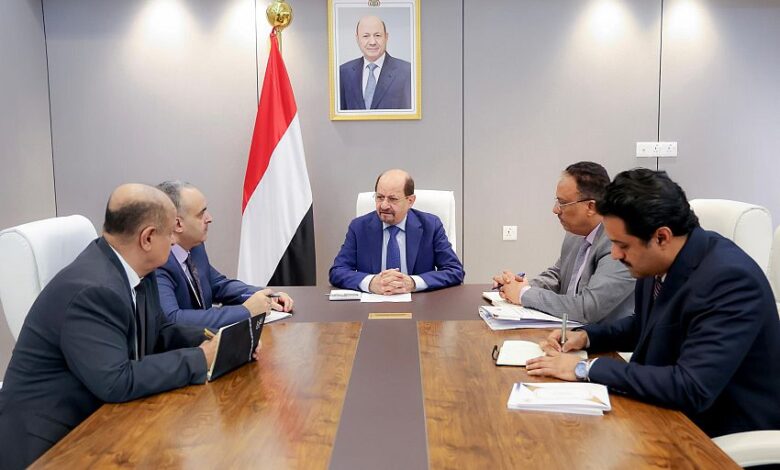
During his meeting on Monday with the Head of the Customs Authority, Abdulhakim Radman al-Qubati, and the Head of the Tax Authority, Dr. Jamal Mohammed Surour, Al-Zindani explained that the government is primarily focusing on enhancing the efficiency of revenue-generating institutions. He emphasized the need to avoid jurisdictional conflicts and address deficiencies and imbalances to strengthen integrity and transparency.
The Prime Minister stressed the importance of regulating public resources and depositing them into the Central Bank to bolster confidence in fiscal policies and establish financial discipline. He affirmed the government’s determination to support both authorities and overcome the challenges they face.
During the meeting, the heads of the Customs and Tax authorities revealed a tangible improvement in revenue levels despite existing challenges. They also highlighted the implementation of several reform measures, including:
- The abolition of illegal fees.
- Strengthening oversight at border crossings.
- Developing operational systems.
- Coordinating with relevant authorities to combat smuggling and limit violations.
The discussion also covered ways to develop the institutional infrastructure of both departments, the importance of updating technical systems, capacity building, and enhancing integration with the Ministry of Finance to meet current requirements and improve collection efficiency.
In conclusion, the Prime Minister stated that the current focus is on enhancing economic stability and increasing public revenue through effective institutional performance. This, he noted, will enable the government to fulfill its obligations to citizens, improve service levels, and solidify the foundations for economic recovery across various sectors.