Yemen Monitor / Newsroom:
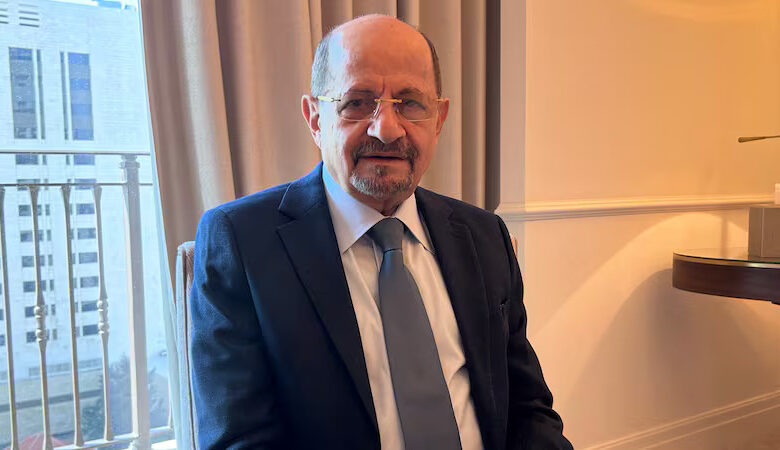
Yemeni Prime Minister and Foreign Minister, Dr. Shayea al-Zindani, signaled his government’s first moves just 24 hours after being sworn in. He announced that their next destination will be the city of Aden “soon,” emphasizing that moving operations inside the country is a vital step toward activating government performance and restoring the order of state institutions.
In a special episode of the “Middle East Podcast” recorded at the Asharq News studios (SRMG) in the King Abdullah Financial District in Riyadh, al-Zindani explained that retaining the Foreign Ministry portfolio is intended “to complete the work already started.” He stressed that presence in Aden must be linked to a physical capacity to manage files, aiming to stabilize institutional performance and enhance decision-making effectiveness.
“The current stage cannot tolerate broad rhetoric; it requires gradual work to rebuild trust,” he stated, noting that establishing an institutional rhythm precedes any expansion of goals, given the high economic pressures and political expectations.
Professional Standards and Citizen Priority
Regarding the formation of the government, al-Zindani asserted that selection was based on purely professional criteria—competence, specialization, and experience—”away from partisan dictates.” He clarified that the government received resumes rather than quota requests. While there are approximately 26 ministries, ministers of state were appointed for specific tasks and to involve youth, while maintaining geographic balance “to reflect the diversity of the state, not to distribute spoils.”
He emphasized that the citizen is the core of the government’s program, with improving living conditions, services, and economic recovery at the top of the priority list. He attributed past imbalances to weak institutional structures and noted relative improvements in services, particularly electricity, supported by Saudi Arabia.
On accountability, he noted that unified political decision-making has created an opportunity to apply the law: “When authority is unified, reward and punishment become possible.”
Economy, Oversight, and Domestic Presence
On the economic front, al-Zindani avoided making quick promises, preferring to discuss restructuring financial management and enhancing transparency. He stated that controlling resources and investing them effectively is the gateway to regaining internal trust and attracting external support.
He deemed the government’s move to Aden a practical and national necessity. He noted that while the swearing-in took place in Riyadh due to constitutional and security circumstances, the focus should be on the substance of the work rather than the symbolism of the location.
Security and Peace
Security-wise, he acknowledged that years of accumulation cannot be overcome quickly but noted relative improvement due to coordinated agencies. Regarding the reorganization of forces, he viewed unifying command and repositioning units outside of cities as essential steps to solidify state authority.
Regarding the Houthis, he affirmed that the government showed flexibility in the peace process but was met with a lack of commitment to agreements. He suggested that recent military and economic developments have weakened the group’s position and that any future negotiations must be based on clear references.
A Half-Century Journey
Reflecting on a career spanning over five decades—from education to diplomacy—al-Zindani noted that Yemen’s deep transformations revealed the fragility of its institutional build. However, he maintained that optimism is a “practical choice,” and the real bet lies in rebuilding trust between the state and its society.