Yemeni Interior Minister: Parties “Affected” by Security Reforms Behind Assassination Attempt in Aden

Yemen Monitor / Newsroom:
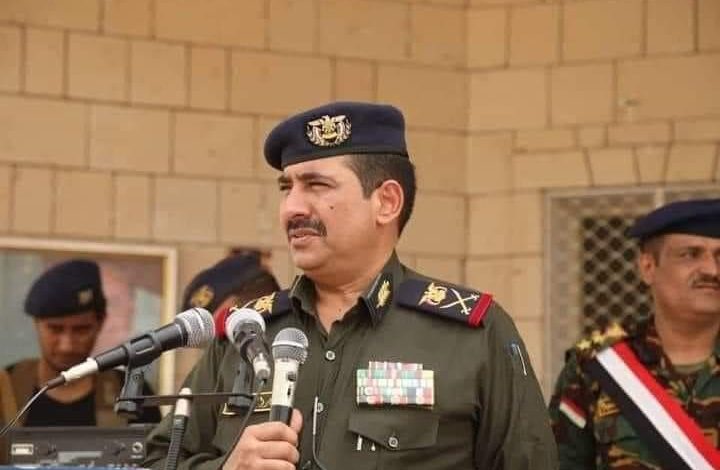
The Yemeni Minister of Interior, Major General Ibrahim Haidan, has accused local and foreign parties—aggrieved by recent security reforms in Aden—of being behind the assassination attempt on Brigadier General Hamdi Shukri, a leader in the Giants Brigades. Haidan described the operation as one that “carries clear messages.”
In an interview with the Saudi newspaper Independent Arabia published today and followed by Yemen Monitor, Haidan emphasized that there are attempts to plunge the temporary capital, Aden, into a “bloody arena for settling scores.”
The Interior Minister explained that the dissolved Southern Transitional Council (STC) dealt with citizens based on “political affiliation,” turning enforced disappearance into a tool to silence opponents. He accused the STC of establishing illegal secret prisons outside the authority of state institutions.
The Minister revealed the launch of a broad field campaign to locate and open these sites to the judiciary, following directives from the head of the Presidential Leadership Council. He stressed that these crimes are not subject to a statute of limitations and that everyone involved or who covered them up will be held accountable.
Haidan spoke of the existence of “irregular” security formations—in reference to those previously funded by the UAE—that emerged outside the state framework. He asserted that these units received direct orders from STC leaders and “foreign entities” (which he did not name), operating according to agendas that do not serve the national interest.
He pointed out that the absence of a unified command and the fragmentation of loyalties created fertile ground for terrorism. He clarified that the top priority now is integrating these factions and rebuilding their doctrine to be for “God and the Country,” rather than for regionalism or specific political components.
The Minister acknowledged that Aden is passing through a “sensitive” phase and that dismantling the legacy of the past years requires time and organized effort. He noted that the withdrawal of Emirati forces from the southern governorates has given the Ministry a significant window to rearrange the security landscape on national foundations, with extensive and deep support from Saudi Arabia, which is working with the Ministry around the clock to normalize the situation and activate intelligence and preventative measures.