Yemen Monitor/Newsroom:
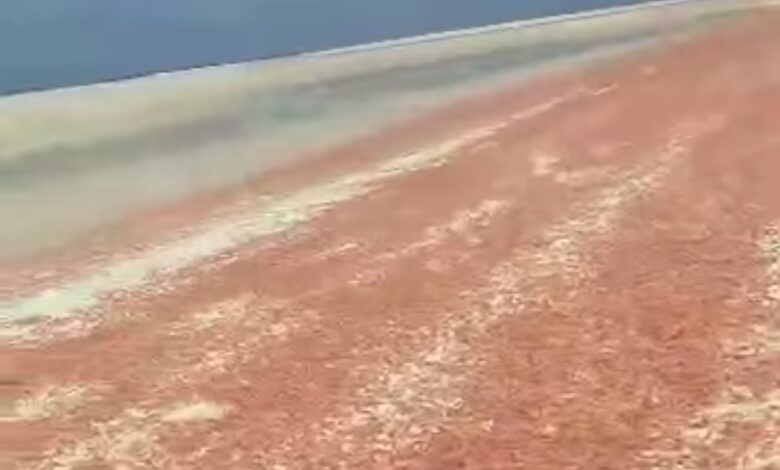
A recent scientific report issued by the Socotra Center for Humanitarian and Strategic Studies has revealed an alarming mass die-off of shrimp in the Ditwah coastal protected area on Socotra Island in January 2026.
The report indicated that this phenomenon is not a passing incident but rather an indicator of deep environmental disturbances threatening one of the most important marine biodiversity sites listed on the UNESCO World Natural Heritage list.
The report noted that the causes of the mass die-off are complex and overlapping, consisting of a lack of dissolved oxygen in the water and harmful algal blooms, known as “red tide,” which consume oxygen and secrete deadly toxins.
It explained that climate changes, such as rising sea temperatures, increase the severity of these problems, alongside changes in current patterns and monsoons that may lead to water stagnation and degraded quality.
The report also did not rule out the role of transboundary environmental pollution, such as oil and heavy metals, in exacerbating the crisis.
The report pointed out that the affected shrimp are sensitive benthic species and that the phenomenon has been recurring for years with the death of other marine creatures such as dolphins, reflecting a large-scale environmental disturbance threatening the unique ecosystem in Socotra.
The report called for urgent measures, including the establishment of an integrated environmental monitoring program to continuously monitor water quality indicators and the implementation of field surveys whenever any die-off occurs to collect and analyze samples that reveal toxins and pollutants.
It also recommended developing emergency response plans based on accurate predictive models, strengthening the management of marine protected areas, and expanding the scope of protection, in addition to supporting specialized scientific research on the effects of climate change on the Arabian Sea.
The report stressed the necessity of regional and international cooperation to monitor transboundary pollution sources that may affect the remote island, emphasizing that protecting the Socotra Archipelago constitutes a crucial investment in global natural heritage and the future of local communities that depend on its marine resources.
The report highlighted that the shrimp die-off phenomenon represents a real alarm bell highlighting the increasing environmental sensitivity in Socotra amidst escalating global pressures, calling for swift action to preserve this unique natural treasure.