Yemen Monitor / Newsroom:
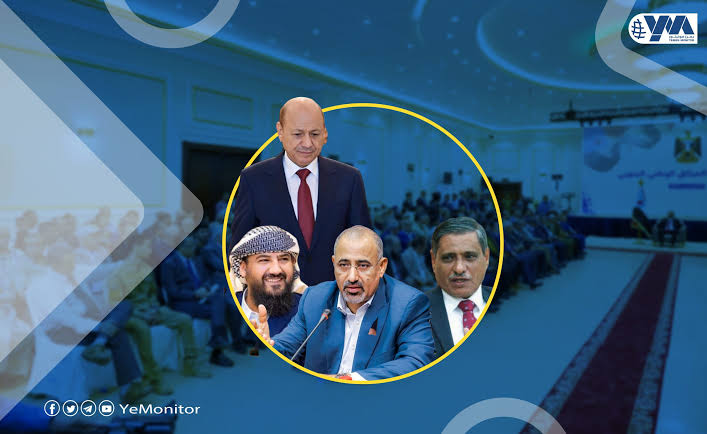
Political calls inside and outside Yemen have escalated, demanding the disarmament of the Southern Transitional Council (STC) militias and other armed formations outside state institutions as a fundamental condition prior to participating in the Southern National Dialogue Conference scheduled to be held in Riyadh.
These demands follow previous experiences that demonstrated the danger of arms remaining outside the state framework to national security and stability.
Writer Mustafa Nagi emphasized that the grave mistake of the 2011–2014 transition period was allowing influential armed parties to enter dialogues without being disarmed. This led to the use of military force to expand geographical influence and control over tribes, eventually resulting in a coup against the dialogue’s outcomes and the destruction of Yemen’s hopes for peace and development. He stressed the need to learn from these lessons to prevent repeating the same mistakes in the upcoming Southern Dialogue.
For his part, journalist Ali Al-Faqih called for a review of the implementation of previous agreements, particularly the 2019 Riyadh Agreement, which explicitly stipulated the integration of militias under the Ministries of Defense and Interior—a move that has yet to be implemented. He noted that the failure to integrate has allowed armed parties to exercise force and obstruct the government’s work, exacerbating chaos and conflict in the south.
Activist Saleh Al-Salami pointed to the necessity of President Rashad Al-Alimi and the Kingdom of Saudi Arabia insisting on the withdrawal of STC forces from the governorates of Shabwa and Aden and the removal of all armed camps. He asserted that a national dialogue cannot be conducted under the threat of arms in strongholds like Ma’ashiq and Balhaf.
In the same context, various Southern components have set conditions for accepting dialogue with the STC, including:
- The full handover of Aden.
- The dissolution of the Council’s military wing and its declaration as a civil political entity.
- Ceding 70% of positions to residents of Southern governorates. They emphasized that dialogue between civil components and armed militias would be futile.
Activist Abdulkarim Omran stressed that the response of the legitimate government and Saudi Arabia must be clear following the STC’s announcement of its readiness for dialogue: there can be no dialogue before a full withdrawal from Aden and the handover of state institutions. He considered that those occupying the temporary capital cannot be partners in dialogue but are rather the primary obstacle to it.
Journalist Ali Al-Uqbi noted that restricting weapons to state institutions is the first pillar of any serious dialogue. He stated that the STC and all armed formations must commit to surrendering their weapons as a prerequisite, recalling the Council’s coup against the Riyadh Agreement and its obstruction of government work through armed force.
Official Statements In official remarks, Ambassador Mustafa Numan, Deputy Minister of Foreign Affairs and Expatriates, confirmed that the actions taken by the President of the STC represent a grave error that has lost him regional and local support. He stated that the Council has become an outlaw group after its military rebellion against the state and the internationally recognized legitimate government. He added that its continuation as an armed entity is unacceptable; instead, it must transform into a civil political party within legal frameworks.
Numan added that the STC militias do not follow state institutions and that their slogans and military uniforms are outside the framework of the National Army. He noted that these militias have sought over the past years to impose control over the South and exploit its resources. He further claimed that the Iranian regime previously trained Council leaders via Hezbollah in Beirut before the Council turned into a tool for the United Arab Emirates in Yemen.
Numan pointed out a fundamental similarity between the approach of the STC and that of Hezbollah and Houthi militias, asserting that the Council does not hold an exclusive mandate to represent the Southern cause. He maintained that a political solution must come through inclusive dialogue, away from imposing facts on the ground by force.
He concluded by stating that Saudi Arabia has long supported the Southern cause, but the miscalculations of the Council’s leadership led to a loss of support. While the UAE is the primary sponsor of the STC—providing funding, training, and arming—he expressed confidence that the UAE will realize that the Council’s actions do not serve its interests or its strategic relations with Saudi Arabia.
Ambassador Numan finished by saying that the only option for achieving peace in the South is for the STC to relinquish its weapons, just as is demanded of the Houthis in the North, stressing that this demand is a clear and principled stance toward all armed militias in Yemen.