Yemen Monitor / Aden / Exclusive:
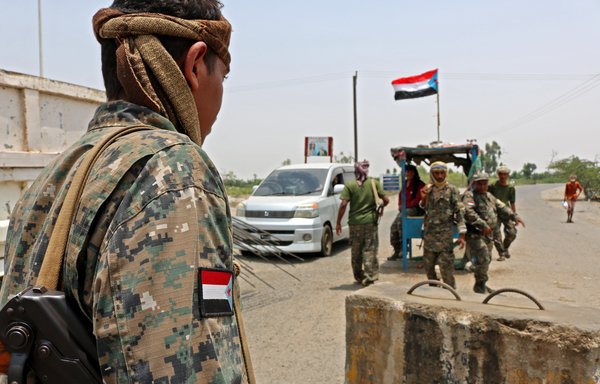
Sources within the Southern Transitional Council (STC) have reported that the formation of a parallel administration in southern Yemen has become a viable option, with a deadline of several weeks set to reach a final decision on the matter.
The New Arab quoted sources stating that the separatist movement, backed by the UAE, may move toward announcing a parallel administration to manage affairs in areas under its control, following its seizure of Hadramout and Al-Mahrah earlier this month.
Sources added that the STC will declare its own administration if the internationally recognized government does not return to fulfill its duties in the south within a period ranging from two weeks to one month. Multiple sources from both the STC and the government confirmed that the Council is seriously considering a “miniature temporary government” to manage the south, given that Prime Minister Salem bin Buraik’s government has not returned to the interim capital, Aden.
Bin Buraik, along with senior officials including Presidential Leadership Council (PLC) Chairman Rashad Al-Alimi, left Aden earlier this month.
The STC views the government’s failure to return to Aden as a form of “punishment” against it, despite being part of the governing authority. The separatist movement believes Al-Alimi and the government are declaring “war” on them, which is driving the council to accelerate the establishment of a separate state in southern Yemen. According to the report, the new administration intends to coordinate with other forces to establish this administrative entity, including the “National Resistance” in Mokha.
International Pressure vs. Local Realities
Sources indicate that the “International Quartet” on Yemen—comprising the US, UK, Saudi Arabia, and the UAE—is pressuring the STC to dissuade it from escalation or taking actual steps toward secession. Despite the STC’s deadline, government sources told the newspaper there are currently no signs of a swift return for Bin Buraik’s government, especially as Rashad Al-Alimi is still awaiting a response from the Quartet and other key actors regarding the STC’s takeover of Hadramout and Al-Mahrah.
STC spokesperson Anwar Al-Tamimi told Al-Araby Al-Jadeed that the Council’s current focus is on “the security dimension and confronting terrorist groups and international smuggling gangs.” However, when asked if this contradicted reports of a government declaration, Al-Tamimi replied: “If securing the south and protecting it from terrorism requires an administrative or political measure, we will not hesitate to take it.”
Warning of Fragmentation
On Wednesday, UN Secretary-General António Guterres warned that a resumption of large-scale fighting in Yemen could have repercussions for the Red Sea, the Gulf of Aden, and the Horn of Africa. He urged all parties, including external actors, to recognize that “unilateral actions will not pave the way for peace, but will instead intensify divisions, raise the risk of escalation, and lead to further fragmentation.”
He emphasized that “Yemen’s sovereignty and territorial integrity must be preserved,” noting that nearly 5 million Yemenis have been displaced by the long-running civil war.
The STC’s takeover of Hadramout and Al-Mahrah earlier this month via a large-scale military operation represents a strategic shift, allowing it to exert influence over sovereign oil fields and eastern border crossings. This move, part of its project for southern secession, has triggered a severe political crisis, leading to the departure of the PLC Chairman and the government from Aden, and the rejection of widespread demands from the government and neighboring countries to withdraw from those regions.