Yemen Monitor / Exclusive:
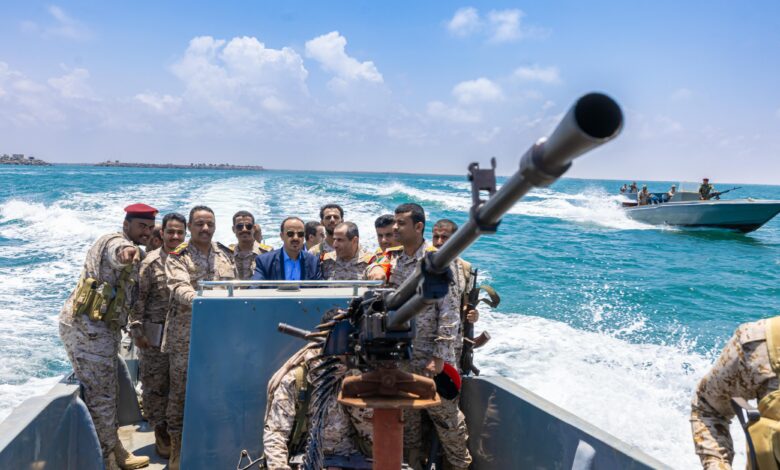
A new research paper by the Mokha Center for Strategic Studies reveals new and alarming dimensions to the construction of airstrips, airports, and military bases on Yemeni islands and coastal cities under the authority of the internationally recognized government. The study says these activities go far beyond the war against the Houthis, touching on complex geopolitical spheres of influence within and beyond the Red Sea.
According to the paper, facilities such as Mokha Airport and the airstrips on Mayun, Zuqar, and Abd al-Kuri serve shared interests between the United Arab Emirates and the armed formations aligned with it—chief among them the Southern Transitional Council (STC) and the National Resistance Forces.
The study notes that these developments are not limited to supporting military fronts. They also serve as pillars for expanding the UAE’s presence along key maritime routes and bolstering its strategic interests in shipping and control over international trade corridors.
The paper argues that the accelerated militarization of these strategic locations comes amid a turbulent regional environment marked by rising armed violence in the Red Sea and the Gulf of Aden, ongoing Houthi attacks backed by Iran, and the activity of Western and Israeli military alliances in the region.
Growing Regional Alarm… Eritrea Issues Warning
The study says this militarization has “provoked” several regional states, which fear that the establishment of foreign military bases in highly sensitive areas could disrupt existing security balances.
It points to notable remarks by Eritrean President Isaias Afwerki during his visit to Cairo in November 2025, in which he warned that the “foreign militarization of the Red Sea is a gateway to chaos,” describing the construction of military bases on Yemeni islands as an attempt by external powers to impose “positions of dominance” in the region.
Afwerki also linked developments on the islands of Socotra, Mayun, and Zuqar to efforts to partition Somalia, stressing that external agendas targeting the Horn of Africa and Yemen share similar objectives—an issue that explains Eritrea’s heightened sensitivity given the proximity of these islands to its coastline.
While Egypt has issued no official position, the study argues that Afwerki’s statements from Cairo may reflect unspoken Egyptian concerns, particularly given the direct impact any tensions in the Red Sea could have on maritime traffic and the Suez Canal.
Warnings Over Use of Facilities for Foreign Agendas
The study warns that Yemen’s new airports and airstrips may be used to serve regional conflicts, including ongoing Emirati support for Sudan’s Rapid Support Forces (RSF). This could turn these facilities into logistical hubs for transporting weapons, fighters, or managing operations.
The paper also notes that the United States may use them to conduct operations against hostile armed groups, while Israel might seek to exploit these locations to strengthen its presence in the southern Red Sea and intercept threats from Iran-aligned groups.
According to the study, this scenario is reinforced by previous public statements from STC leaders expressing readiness to normalize relations with Israel should the south secede, as well as the July 2025 incident in which a British journalist of Israeli origin was allowed access to sensitive areas in Aden, al-Dhalea, and Shabwa.
Conclusion
The paper concludes that the military developments on Yemen’s islands and western coastline represent part of a broader race for regional and international influence—one that could provoke the Houthis to launch limited strikes in response to this expansion.
It stresses that Eritrea tops the list of regional states expressing concern, viewing the presence of foreign military bases near its shores as a direct threat to the stability of the Red Sea. The study asserts that regional security will remain elusive without cooperation among littoral states and international support that helps maintain the area’s strategic balance.