Al-Aradah Directs Marib Executive Office: “The Citizen Is the Center of Administrative Work and Its Highest Priority”

Yemen Monitor – Newsroom:
Lt. Gen. Sultan Al-Aradah, Member of the Presidential Leadership Council and Governor of Marib, affirmed that citizens must remain at the heart of administrative action and its highest priority, stressing that public satisfaction is the true measure of any official’s success, and that no effort holds value unless it positively impacts people’s lives.
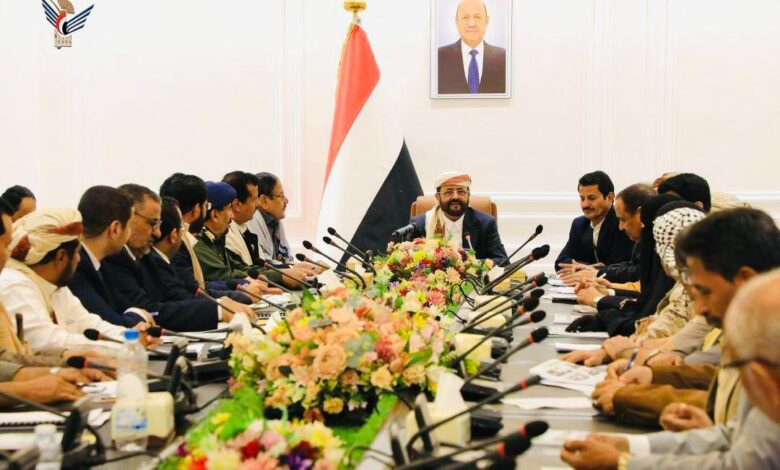
His remarks came while chairing a meeting of the Executive Office in Marib on Sunday, dedicated to reviewing performance across government departments, as well as the challenges they face and ways to address them.
Al-Aradah emphasized the need to intensify efforts amid the challenges the country is experiencing, urging serious work, administrative discipline, and a strong sense of responsibility toward God and the nation.
He stressed that all officials must recognize the national significance of the tasks they perform during this critical stage in Yemen’s history—one that tolerates no negligence or complacency and demands continuous improvement in service delivery to meet citizens’ expectations.
“The responsibility entrusted to us is a duty, not a privilege; public office is neither a prize nor a means for personal gain,” he said. He called for facilitating citizens’ administrative procedures, avoiding unnecessary complications, and gradually advancing toward digital transformation to provide government services efficiently and smoothly.
He instructed all departments to fully adhere to regulations within a comprehensive vision to enhance overall performance, modernize administrative methods in line with current needs, boost staff operational efficiency, eliminate neglect and disorder, adopt proper planning, and maintain regular monitoring and evaluation of discipline and productivity. He also stressed the optimal use of available resources.
Al-Aradah highlighted that the success of administrative work depends on cooperation, integration, coordination, effective communication, and the exchange of expertise and information. He underscored the importance of harmonizing efforts in implementing developmental projects and plans at both central and local levels, working as one team—describing this as the solid foundation for success.
He reiterated that nation-building, development, and administrative reform are ethical and national responsibilities that require collective effort and placing the interests of the country and its citizens above everything.