Yemen Monitor / Detroit:
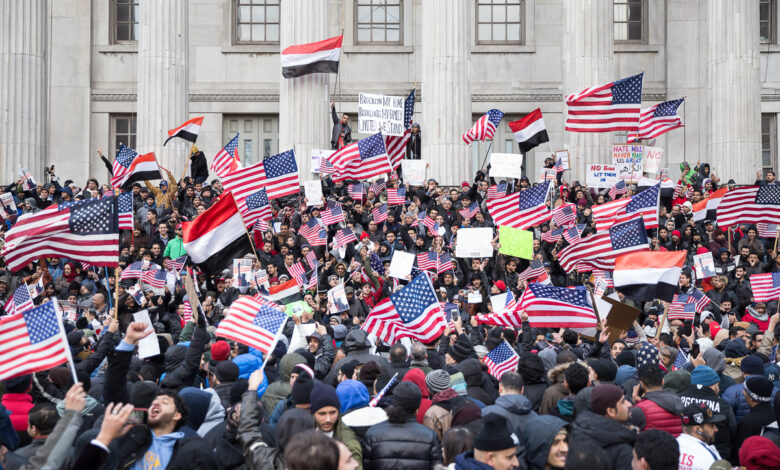
More than three months after the Trump administration issued its second travel ban targeting Yemen, officials from the Yemeni community in Detroit and its suburbs (Metro Detroit) say the decision is “discriminatory,” spreads fear, and creates major logistical problems for those with ties to the region.
The measure, announced on June 5, came into effect four days later and targets 12 other countries, most of them Muslim-majority nations in Africa and the Middle East.
Abdulhakim Al-Saadi, a member of the National Association of Yemeni Americans in Dearborn, commented on the decision, saying: “It has been continuous suffering over these years, and now we face a new challenge—the ban,” according to The Oakland Press.
U.S. Congresswoman Rashida Tlaib, a Democrat, said the new travel ban is “discrimination targeting certain people based on their ethnicity, religion, and skin color,” while the Trump administration defends the measure as necessary for protecting U.S. national security.
The Detroit area is home to the largest Arab community outside the Middle East and has the highest concentration of Yemeni immigrants in the US. Congresswoman Tlaib described the ban as “devastating” for families who have spent years and resources on immigration applications.
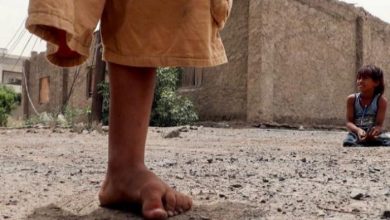
According to a UNFPA report released in April, Yemen continues to face one of the worst humanitarian crises in the world, with around 19.5 million people—more than half the population—needing some form of humanitarian aid. The country is also experiencing one of the most severe hunger crises, with more than half the population struggling to access food.
The crisis has been worsened by airstrikes on vital civilian infrastructure such as Sana’a International Airport and Hudaidah Port. Just last week, Israel carried out air raids on Hudaidah, claiming they targeted “military infrastructure” used by the Houthis.
Yemeni activists stressed that the ban heavily affects family reunification processes, as Yemenis face far longer visa procedures than others. With no U.S. embassy in Yemen, they are forced to travel to neighboring countries such as Djibouti, Jordan, Egypt, or Turkey to complete immigration paperwork—adding huge financial and psychological burdens.
Some Yemeni Americans feel “forgotten” by both major political parties in the US. In Hamtramck, a city with a large Yemeni and Muslim population, Trump even gained support from some local leaders, though activists argue this support does not reflect the majority of the community.
Activist Waly Al-Tayef noted that Houthi actions in the Red Sea are being used as a pretext to impose “collective punishment” on civilians and those wishing to travel to the U.S. He argued that the Yemeni American community has become a “scapegoat” in the ongoing conflict between the Houthis, the US, and Israel.