UK Ambassador Warns of Risks of Division and Reveals International Community’s Approach Toward Yemen

Yemen Monitor / Newsroom:
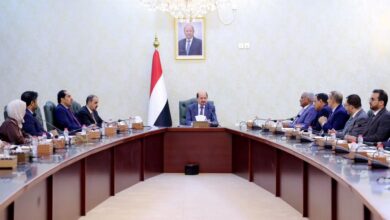
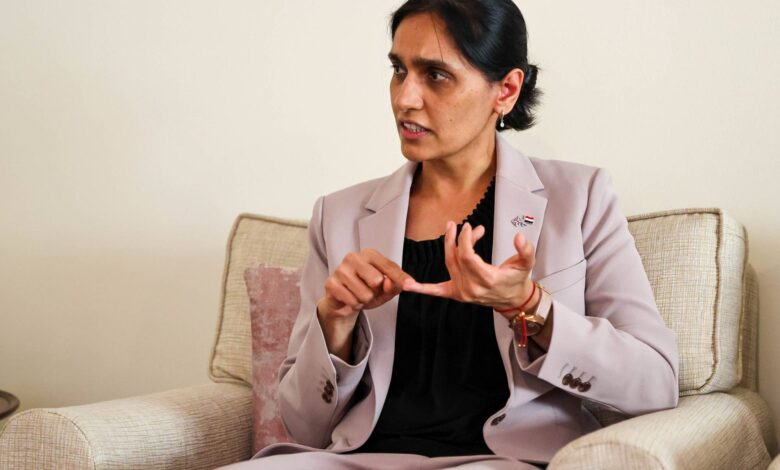
The British Ambassador to Yemen, Abda Sharif, stressed that political unity and cohesion among the Presidential Leadership Council and the Yemeni government are essential pillars for the country’s stability, warning that any divisions would only serve the Houthis and those who do not put Yemen’s interests first.
In an interview with Asharq Al-Awsat, the ambassador said that her country does not currently plan to push the UN Security Council to issue new resolutions on the Yemeni file, noting that Britain is focused on maintaining continuous international support for Yemen and monitoring developments through the Council’s monthly meetings.
Sharif emphasized that the recent improvement in the Yemeni currency is an important positive indicator that has provided tangible relief for Yemeni families amid severe economic pressures. However, she stressed the need to move forward with further economic reforms, supported by the International Monetary Fund, to ensure long-term economic stability.
She explained that the currency’s recovery is due to the Yemeni government’s efforts and the Central Bank governor’s measures to address persistent decline, but added that sustainable economic stability requires difficult reforms backed by international support.
The ambassador urged the international community to increase pressure on Iran and impose clear consequences to halt its destabilizing activities in Yemen, particularly in light of Yemeni forces’ recent interception of Iranian weapons shipments bound for the Houthis.
Sharif also confirmed the existence of a “strong and solid” partnership between the UK and Saudi Arabia in supporting Yemen’s stability, praising relations with the Saudi Ambassador to Yemen, Mohammed Al Jaber. She also announced the upcoming “Yemen Partnership for Maritime Security” conference, hosted by Riyadh with the participation of more than 40 countries, aimed at supporting the Yemeni Coast Guard and securing the country’s maritime interests.
She considered the Coast Guard the first line of defense for Yemen’s security and stability, stressing the importance of providing them with strong political and financial support.
In her assessment of the efforts of UN Special Envoy Hans Grundberg, Sharif said he is doing a good job despite the complexities of the political situation and regional escalation, but pointed out that Houthi attacks in the Red Sea are hindering the political negotiation process.
She warned that any steps that weaken the unity of the Presidential Leadership Council would benefit those who oppose Yemen’s stability, stressing that the legitimate government needs political cohesion and stronger governance and institutions to overcome challenges.
Sharif concluded that the Houthis’ continuous threats, attacks, severe economic deterioration, and violations against UN staff confirm their failure to achieve the peace and stability Yemen needs.
She emphasized that joint international support—particularly the close coordination between London and Riyadh—remains a cornerstone for working toward Yemen’s stability and prosperity, underlining the importance of continued cooperation to confront the security and economic challenges facing the country.