Yemen Monitor / Newsroom:
A recent analytical paper has revealed that the roots of the current armed conflict in Yemen date back to the theocratic theory of the Zaydi imams, who restricted rule to the descendants of Al-Hassan and Al-Husayn, considering it a “divine right” from God. This sparked a continuous conflict for centuries with the Yemeni people who rejected the rule of the imamate.
The paper, issued by the Mocha Center for Strategic Studies and written by Dr. Ismail Al-Suhaili, confirmed that the conflict in Yemen revolves around two contradictory projects: the republican project, which is based on the people’s right to choose their political system and institutions, but has faced repeated failures in building a just and sustainable system.
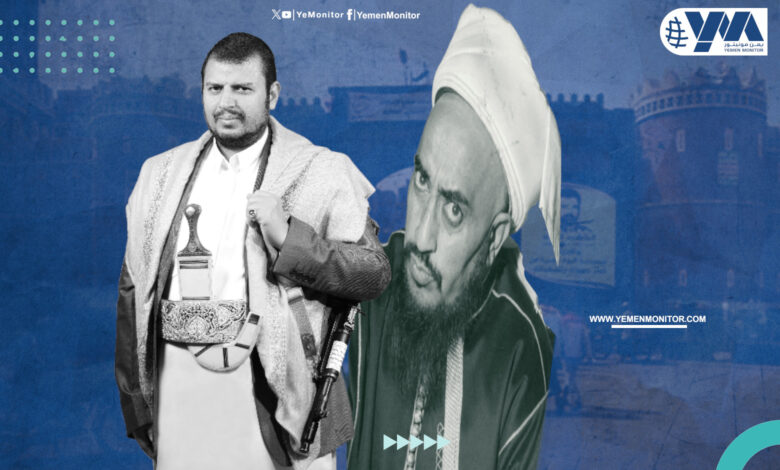
The other project is the hereditary imamate project, embodied by the Houthi group, which adopted an extremist imamate ideology and a racist, dynastic approach. Its policies led to the September 21, 2014 coup against the republican system.
The paper explained that the failures of state-building in northern and southern Yemen since the revolutions of September 26, 1962, and October 14, 1963, up to the Republic of Yemen after the 1990 unification, led to the accumulation of crises, cycles of violence, and the collapse of institutions. This made achieving a modern state based on law and institutions a postponed goal that Yemenis aspire to.
The paper touched upon the post-“Arab Spring” phase, where the Houthi group benefited from popular dissatisfaction with the national unity government and its inability to address economic and security conditions. Additionally, the Houthis exploited President Abdrabbuh Mansur Hadi’s political and tribal power struggles, formed an alliance with the late President Ali Abdullah Saleh, and received Iranian support, along with the complicity of the UN envoy Jamal Benomar. This enabled them to seize control of Sana’a and expand into the rest of the governorates.
The analytical paper concluded by pointing out that the future of Yemen is linked to the ability of national forces to overcome past failures and unite to confront the imamate project. It considered that the continuation of political and military divisions will keep the country in a cycle of chaos and violence, while restoring a modern state built on institutions and law remains the only option to ensure peace and stability.