Yemen Monitor/ Al-Jawf/ Exclusive:
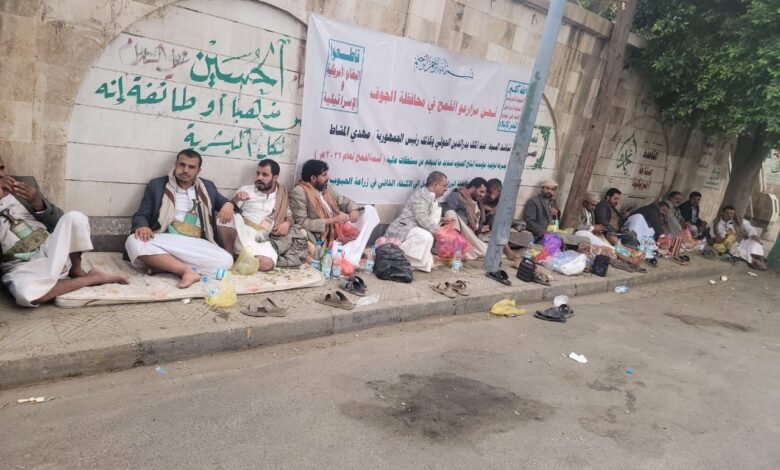
Wheat farmers in Al-Jawf Governorate (northern Yemen) continued their open sit-in for the second consecutive day in front of the building of the Ministry of Agriculture under the control of the Houthi group in the capital, Sana’a, protesting the group’s procrastination in paying their financial dues for the value of the wheat for three months.
Local sources told “Yemen Monitor” that dozens of farmers gathered in front of the ministry’s gate to demand the payment of their dues for selling the winter crop (2024-2025), which was received by the Houthi-affiliated “General Corporation for Grain Production” without its price being paid so far.
The farmers described the delay of their dues as an “economic crime and social injustice,” confirming in a statement that their goods have been held in the grain corporation’s warehouses for three months without their value being paid, as a result of disputes and obstacles between the appointed Houthi leaders in the ministries of economy and finance, and the Central Bank in Sana’a.
The statement mentioned that the farmers are chasing Houthi promises, pointing out the intransigence of the Houthi-affiliated Central Bank Governor in signing and disbursing the financial allocations, despite the signatures of the ministers of finance and agriculture in the de facto authority.
The statement revealed that farmers have suffered severe losses due to the delay in financial dues, and that wheat cultivation is no longer viable as the Houthis promoted, after causing debts to accumulate on them, threatening escalatory steps if the intransigence continues.
The General Corporation for Grain prevents farmers in Al-Jawf from marketing their crop and forces them to sell it to the corporation, while imposing certain conditions for accepting the crop, and its procedures take days during which farmers are forced to stand in front of its headquarters distributed across the districts.
The group deliberately delays the financial amounts for the farmers, while the protesters complain that there are entities that own large farms in Al-Jawf and receive their dues firsthand without being subjected to the complicated procedures that happen with the rest of the farmers, accusing them of belonging to leaders in the group.
Wheat cultivation in Al-Jawf receives significant promotion by the Houthis through the grain corporation, while research studies talk about a trend to buy vast lands in Al-Jawf and impose a demographic change in the governorate, which holds a large oil reserve.
Specialists also warned that the method the Houthis are using to expand wheat cultivation in Al-Jawf affects the governorate’s water reserves and causes major depletion that cannot be compensated for by rain and torrents, which threatens the future of agriculture since it requires large quantities of water.