Yemen Monitor / Agencies:
A report by The Maritime Executive, a magazine specializing in maritime affairs, revealed that Yemen’s Houthi group has expanded its military operations into the Gulf of Aden, deploying anti-ship cruise missiles in attacks that pose an increasing threat to international maritime security.
According to the report, on September 29, the Houthis launched a missile strike targeting the Dutch cargo vessel MV Minervagracht, owned by the company Spliethoff. The attack caused a fire onboard and injured two crew members.
The European Union’s naval mission (ASPIDES) carried out a complex rescue operation, evacuating the ship’s crew in two stages with the help of Greek and French frigates. The Dutch-flagged vessel remains afloat in the Gulf of Aden and continues to pose a navigational hazard.
The report noted that the attack was launched using a cruise missile fired from the Mukiras area in Al-Bayda Governorate, a region under Houthi control. Experts said this indicates the group has moved part of its missile arsenal southward, extending its coverage from Bab al-Mandab Strait to the Gulf of Aden—a significant escalation that broadens its threat to international shipping lanes.
Houthi military spokesman Yahya Saree claimed responsibility for the attack, saying the ship was targeted for “violating the Houthis’ blacklist of vessels linked to Israel.” He added that the group would continue to attack ships in the Red Sea, Bab al-Mandab, and the Gulf of Aden, and threatened to target major companies such as ExxonMobil, Chevron, and ConocoPhillips, which he claimed were “under sanctions.”
Analysts noted that these statements effectively signal the end of the informal truce between the Houthis and the US, which was brokered by Oman last May.
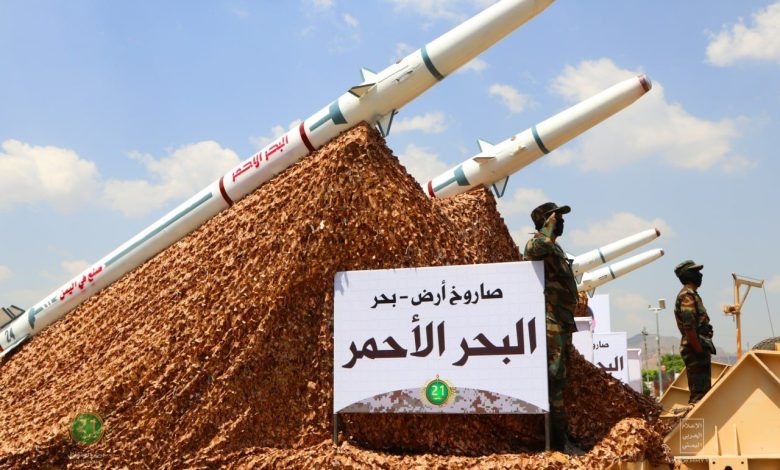
The Maritime Executive further reported that the Houthis had previously relied on drones and explosive-laden boats for their maritime attacks, but the use of radar-guided cruise missiles such as the “Mandeb-2”—an upgraded version of Iran’s Noor/Ghadir missile—marks a qualitative leap in their capabilities, even if the missiles remain inaccurate against moving naval targets.
The report emphasized that the Gulf of Aden has become a strategic focus for the Houthis, as it hosts the Main Shipping Transit Corridor (MSTC) linking the Suez Canal with the Indian Ocean and East Africa. Any escalation in this region, the report warned, represents a direct threat to global trade and shipping routes toward the Cape of Good Hope.
The report concluded that the deployment of Houthi missiles in southern Yemen significantly expands the scope of the maritime threat and poses a new challenge to the international community in safeguarding one of the world’s most vital sea lanes.