Human Rights Watch: Israeli Attack on Media Building in Sana’a Highlights Danger to Journalists in Yemen

Yemen Monitor/ Newsroom:
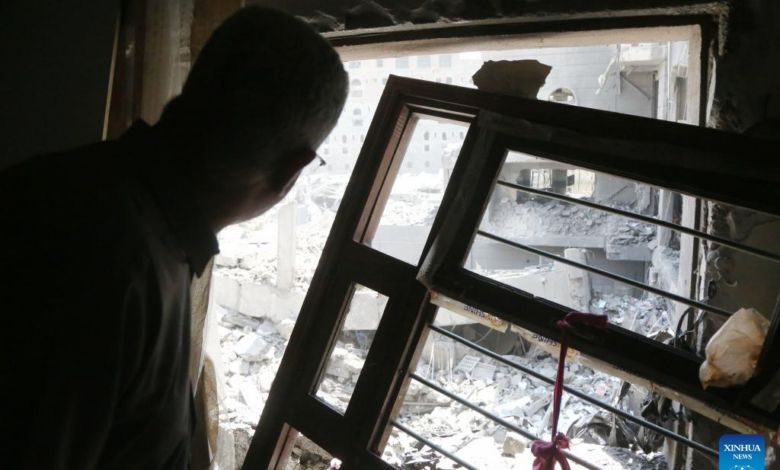
Human Rights Watch (HRW) has condemned an Israeli airstrike on a media building in Yemen’s capital, Sana’a, on September 10, 2025. The organization stated that the attack underscores the threat journalists and media workers face from all parties to the conflict in Yemen, both domestic and foreign.
According to an HRW statement, the Israeli attack, which targeted a building used by the Houthis, is part of a series of recent Israeli strikes on Sana’a and Al-Jawf. These attacks have resulted in the deaths of at least 35 people, including journalists, and have wounded dozens more, according to the Houthi Ministry of Health.
HRW confirmed that the bombed building houses the headquarters for Houthi media outlets as well as the offices of other newspapers. The organization quoted Yemeni analyst Mohammed Al-Basha, who said the bombing occurred while staff from the weekly newspaper “26 September” were in the building preparing the paper for distribution, which led to a higher number of casualties.
The organization stressed that media sites and broadcasting facilities are civilian objects and cannot be targeted under international law unless they are actively contributing to military operations. HRW emphasized that the mere fact that these facilities are loyal to the Houthis or hostile to Israel does not make them legitimate military targets.
HRW added that the Israeli attack on Sana’a once again highlights the dangers faced by journalists in Yemen. The organization noted that Israeli forces have repeatedly targeted journalists in the occupied Palestinian territories and Lebanon. It called on other countries to pressure both Israel and Yemeni authorities to immediately cease targeting journalists and media workers and to protect freedom of expression and information, which is a commitment under international law.
The organization also pointed out that the strikes occurred in a densely populated residential area adjacent to the Old City of Sana’a, a UNESCO World Heritage site, and at a time when streets were crowded with pedestrians and cars, increasing the danger of the attack to civilians.