Yemen Monitor / Newsroom:
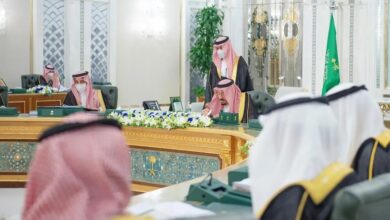
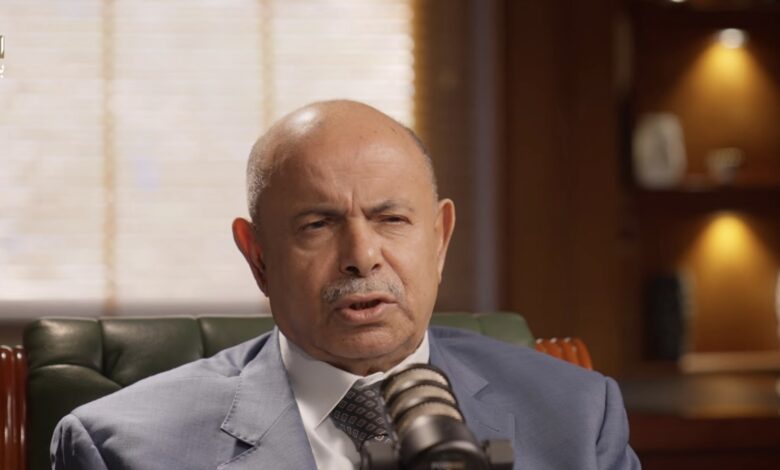
A member of the Yemeni Presidential Leadership Council, Salem Al-Khanbashi, stated that the Hadramawt governorate in the eastern part of the country has come to represent the “first train car” in the path of development and the anticipated political solution, stressing that the Presidential Leadership Council has become more cohesive and united in facing political and economic challenges and ending the Houthi coup.
This came during an interview with the “Yemen Podcast” program, viewed by “Yemen Monitor,” in which Al-Khanbashi discussed the performance of the Presidential Council, the economic and service conditions, the future of Hadramawt, as well as the security and political developments in the country.
Al-Khanbashi said that the most prominent feature of the current formation of the Presidential Leadership Council is the “unity of political stance” among its members, pointing to their consensus around the goal of restoring state institutions and ending the Houthi group’s control, whether through peaceful solutions or other options if peace efforts falter.
He added that the addition of new members to the Council contributed to enhancing the political, military, and geographical balance, confirming that the Council’s meetings are held regularly to discuss files related to citizens’ lives and public services.
On the economic front, Al-Khanbashi acknowledged the ongoing living standards gap between citizens and wage levels, despite recent government measures regarding allowances for state employees. He attributed the crisis to the repercussions of global economic conditions and the rise in insurance and maritime transport costs, in addition to the impacts of liberating the customs dollar rate on the prices of basic commodities.
He called for rationalizing government spending and enhancing local and central revenues, pointing to recommendations to increase the local authorities’ share of shared resources within the framework of enhancing financial and administrative decentralization.
Regarding the electricity file, Al-Khanbashi said that the energy sector suffers from accumulations and neglect that have persisted for decades, noting that Hadramawt ‘s actual requirement during the summer season ranges between 400 and 500 megawatts, while current production does not exceed half of this amount.
He explained that the authorities are working to implement a three-track plan to address the electricity crisis, which includes providing urgent emergency power plants, establishing strategic stations relying on gas and oil, alongside an electrical interconnection project with the Kingdom of Saudi Arabia via Al-Wadeah border crossing.
Regarding the halt of oil exports due to Houthi attacks on ports, Al-Khanbashi confirmed that oil revenues used to represent between 70 and 80 percent of the state budget, noting that a large portion of the current production is directed to operating power plants in several governorates.
Discussing events that Hadramawt witnessed early this year, Al-Khanbashi revealed previous meetings that brought him together with leaders in the Southern Transitional Council (STC), during which he said he warned against moving forces toward the governorate, considering that addressing military and security files must be done through state decisions and its official institutions.
He stressed that the security situation in Hadramawt is “under control,” praising the role of the security and military forces deployed in the governorate in protecting entry points and desert areas.
In the context of his talk about the future of Hadramawt, Al-Khanbashi indicated that there are preparations to hold an inclusive Hadrami conference during this June, aiming to reach a unified vision regarding the governorate’s entitlements in any upcoming political settlement, including political representation and the distribution of wealth and resources.
He emphasized that centralization represents one of the most prominent causes of corruption and weak administration, calling for the adoption of a multi-region federal state model to ensure that regions manage their local, economic, and security affairs.
At the conclusion of the interview, Al-Khanbashi called on the Houthi group to engage in a comprehensive peace process and abandon what he described as “ideas of divine right.” He also praised the Saudi role in supporting Yemen, expressing optimism about the possibility of achieving a developmental and economic transformation during the coming years if political stability and opportunities to empower youth and women in state institutions are provided.