Yemen Monitor | Newsroom:
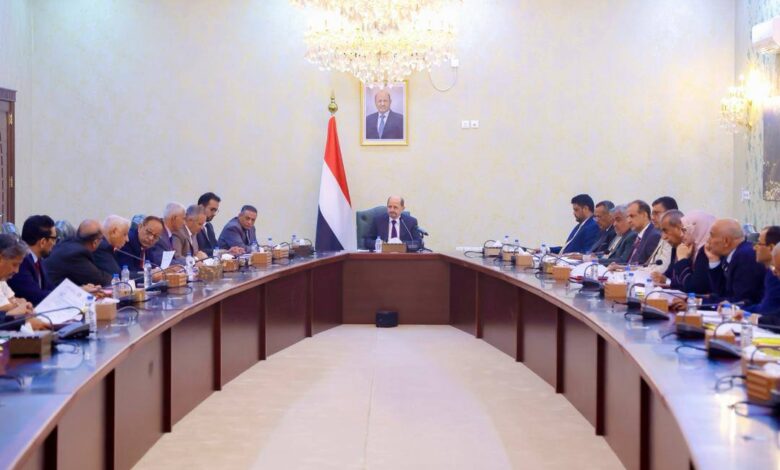
The Supreme Council for Higher Education, chaired by Prime Minister and Foreign Minister Shayea al-Zindani, approved a series of resolutions on Monday in the temporary capital, Aden. The measures aim to modernize public and private universities and address the systemic challenges facing the country’s higher education sector.
Key decisions included the accreditation of new academic programs and the establishment of scientific colleges and departments across several public institutions, including the Universities of Aden, Taiz, Sheba Region, Abyan, Lahj, Shabwah, and Al-Mahrah. The government stated these steps are intended to align educational outcomes with modern scientific developments and the evolving needs of the labor market.
In a significant expansion, the Council approved the transformation of the Taiz University branch in Al-Turba into an independent institution named “Al-Ma’afir University for Science and Technology.” The Ministry of Higher Education has been authorized to finalize the necessary legal and administrative procedures for the transition.
The meeting discussed the conditions of academic staff at universities, including legal settlements, promotions, and housing allowances, as well as improving academic accreditation and quality assurance standards and reviewing educational programs at public and private higher education institutions.
Additionally, the Council ratified Arabic and English proficiency programs for postgraduate students and approved an infection control program affiliated with Hudaidah University (currently operating in Taiz), stressing the implementation of associated technical recommendations.
Prime Minister Shayea al-Zindani described the higher education sector as a “fundamental pillar for nation-building,” emphasizing the need to shift from “crisis management to creating solutions.” He called for long-term strategic plans focused on curriculum development, support for scientific research, and digital transformation, while maintaining the independence of universities from political conflicts.