Yemen Monitor / Newsroom:
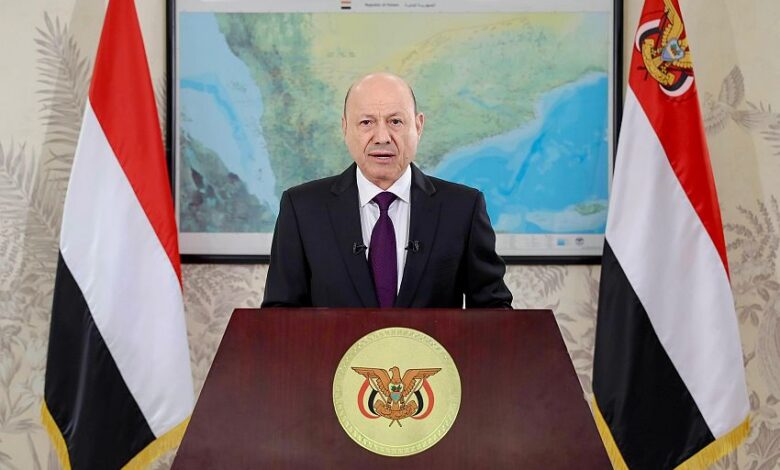
The Chairman of Yemeni Presidential Leadership Council, Rashad Mohammed Al-Alimi, renewed his praise on Thursday for the positions of the Coalition to Support Legitimacy, led by the Kingdom of Saudi Arabia, alongside the Yemeni people and their constitutional legitimacy, on the occasion of the 11th anniversary of the launch of Operation “Decisive Storm” in 2015.
Al-Alimi said in a post on his X account that this occasion represents a remembrance of “a decisive brotherly stance led by the brothers in the Kingdom of Saudi Arabia alongside the Yemeni people and their constitutional legitimacy, against the projects of chaos and militias,” describing it as “the best example of integrated Arab deterrence in modern history.”
The Yemeni president considered the anniversary of “Decisive Storm” a renewed opportunity for reflection and comparison between an Arab nationalist project that supports the national state, stability, and development, and an Iranian project based on violence, chaos, usurping decision-making, and confiscating the will of peoples and the future of their generations.
In March 2015, the formation of the Arab coalition led by the Kingdom of Saudi Arabia, with the participation of Arab and Islamic countries, was announced from the Saudi capital Riyadh, along with the launch of a military operation under the name “Decisive Storm,” aimed at restoring the Yemeni state and ending the Houthi group’s control over the capital, Sana’a.
At the time, the coalition received broad support from Yemenis and segments of Arab public opinion, before gaining international legal cover weeks later with the issuance of UN Security Council Resolution 2216 under Chapter VII, which stipulated support for Yemeni legitimacy and imposed an arms embargo on the Houthis as part of efforts to end the crisis and restore stability.
The resolution, issued in April 2015, constituted a pivotal moment in the course of the crisis, as it recognized the legitimacy of the Yemeni government and considered the Houthi group’s actions an armed coup against state institutions, demanding that they withdraw from the cities they had seized, foremost among them Sana’a, and hand over the heavy weapons they had seized from the military.
The resolution also imposed an arms embargo on the group and its supporters, and opened the door for international action against any party that obstructed its implementation, making it a fundamental reference for any military or political action aimed at ending the coup and restoring the state.
During the first years of the war, the coalition’s actions focused on preventing the expansion of Iranian influence in Yemen and blocking the path to establishing an armed entity akin to “Hezbollah” on the southern border of the Kingdom of Saudi Arabia.