Yemen Monitor/Newsroom:
A recent analytical paper by the Mokha Center for Strategic Studies reveals that the Israeli airstrikes targeting a Houthi government meeting in Sanaa in late August 2025 represent a “dangerous strategic shift” in the course of the conflict. This marks a move by Israel from striking infrastructure and civilian facilities to assassinating prominent political leaders.
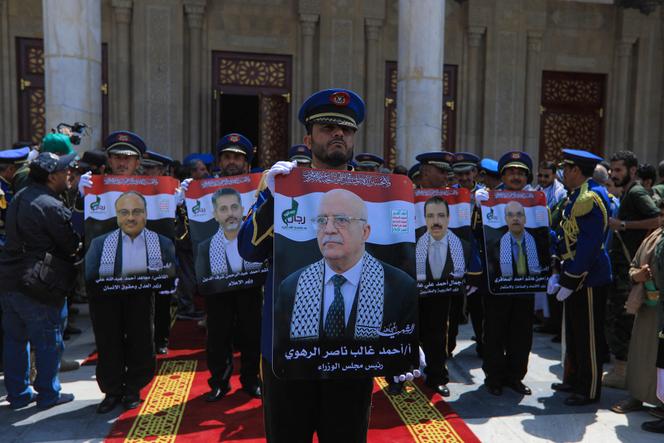
According to the report, the operation—dubbed “Drop of Luck” by the Israeli military—involved 14 fighter jets firing around 40 missiles. The strikes killed Houthi Prime Minister Ahmed Ghalib al-Rahwi and a large number of his ministers, including the foreign, information, justice, economy, agriculture, energy, culture, and youth ministers. Several others were wounded, while government buildings and facilities were destroyed.
The study argued that Israel carried out the strike to achieve several strategic goals: establishing a new deterrence equation after the Houthis’ successful drone and missile attacks on Israeli territory, weakening Iran’s influence in Yemen, and responding to political and public pressure inside Israel to demonstrate a decisive achievement in the war.
The paper pointed out that the operation created deep confusion within the Houthi ranks. After more than a year of efforts to form a unified government, the airstrikes undermined those efforts and returned the group to a state of internal divisions. It also forced them to tighten their security protocols for protecting their leaders.
While the Houthis may now find it harder to escalate against Yemen’s internationally recognized government or along the Saudi border, the paper warned that continued Israeli strikes on infrastructure will further worsen the humanitarian situation, fueling public anger against the group.
The report outlined three possible scenarios:
- Limited retaliation — Houthis respond with controlled strikes to maintain pressure without escalating.
- De-escalation — A potential easing of hostilities if regional deals, such as a Gaza ceasefire, are reached.
- Direct escalation — Houthis launch major strikes on sensitive Israeli targets, potentially triggering another wave of Israeli assassinations.
The study concluded that the targeting of the Houthi government is a “turning point” in the conflict, affecting not just the military balance but also the group’s political structure, leaving it “almost without an executive leadership.”