Yemen Monitor / Newsroom:
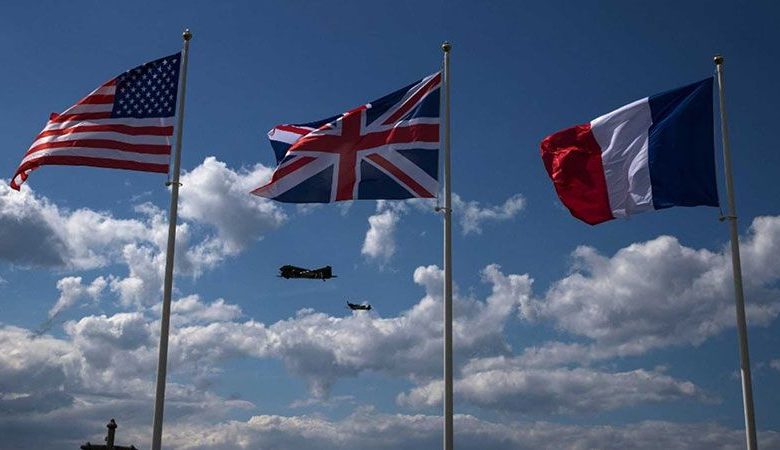
The United States, France, and the United Kingdom affirmed on Tuesday their full support for the legitimate Yemeni government and the sovereignty of the Republic of Yemen, condemned ongoing Iranian violations, warned against Tehran’s continued support for the Houthi group—internationally classified as a terrorist organization—and reiterated their rejection of the group’s attacks on the Kingdom of Saudi Arabia and its threats to international navigation.
The statements came during an emergency session of the UN Security Council on Yemen, where the three countries stressed the need to halt Iranian interference, implement Security Council resolutions, and support the political process under UN auspices.
Tammy Bruce, Deputy Permanent Representative of the United States to the United Nations, said that Washington supports the Yemeni government and its Gulf partners in confronting what she described as the “terrorist threat” posed by the Houthi group with direct Iranian support. She affirmed that the US is prepared to use all available tools, including sanctions, to advance efforts toward a peaceful solution.
Bruce revealed information she said confirms that an Iranian aircraft landed at Sana’a airport—under Houthi control—on July 3, carrying elements of Iran’s Islamic Revolutionary Guard Corps and experts in drones and missiles, aimed at enhancing the group’s military capabilities. She noted that a second Iranian aircraft entered Yemeni airspace on the day of the Security Council session, in defiance of the Yemeni government’s ban on such flights.
She added that this overt Iranian support, according to Washington, represents the most dangerous direct intervention since 2015 and constitutes a clear violation of Security Council Resolution 2216. It also enables the Houthis to continue threatening the Yemeni people and targeting international navigation in the Red Sea and strategic waterways.
The US ambassador also accused Iran of violating Security Council Resolution 2817, stating that Tehran continues to attack regional states and threaten maritime trade through its armed proxies. She called on the Security Council to take a unified and firm stance to halt Iran’s repeated violations.
For his part, France’s Permanent Representative to the UN, Jérôme Bonnafont, affirmed that the landing of Iranian aircraft at Sana’a and Hudaidah airports without the approval of the legitimate Yemeni government constitutes a flagrant violation of international law and Yemen’s sovereignty. He demanded that Tehran immediately cease transferring weapons, military and missile technology, and drones to the Houthis, and fully comply with Security Council resolutions, particularly Resolutions 2216 and 2624.
France stressed that continued Iranian support for the Houthis represents a direct threat to international peace and security. It called on the group to halt its attacks on the Kingdom of Saudi Arabia and its threats to international navigation in the Red Sea, and announced its continued participation in the European naval operation “Aspides” to protect international shipping.
Paris also accused the Houthis of obstructing humanitarian work and detaining UN and international organization staff, demanding the immediate and unconditional release of all detainees, and emphasizing that a sustainable solution to the Yemeni crisis can only be achieved through a comprehensive political process led by the United Nations.
The United Kingdom, in turn, condemned Houthi attacks on the Kingdom of Saudi Arabia, describing them as reckless and unacceptable, and warning that they undermine peace efforts and threaten regional security.
London expressed concern over the landing of two Iranian aircraft in Yemen without the approval of competent Yemeni authorities, considering it a clear violation of Yemen’s sovereignty and international law. It reiterated its support for Yemen’s unity, independence, and territorial integrity.
Britain affirmed its solidarity with its Gulf partners and its commitment to working with the Yemeni government and Security Council members to support de-escalation, implement UN resolutions, and reach a comprehensive political settlement that ends the conflict in Yemen.
Since the early hours of Monday, the Yemeni arena has witnessed accelerated field and political developments that have placed the country before a new wave of escalation. It began with a statement from the Ministry of Foreign Affairs of the Houthi government (not internationally recognized), which escalated its rhetoric toward the Kingdom of Saudi Arabia, warning against any steps aimed at entrenching restrictions on Sana’a International Airport and holding Riyadh fully responsible for the repercussions of any potential escalation.
In response to that statement, Chairman of the Presidential Leadership Council Rashad al-Alimi affirmed that the Houthis insisted on proceeding with receiving a new Iranian flight outside the legal and sovereign frameworks regulating civil aviation, considering it a deliberate disregard for state institutions and an outright rejection of all efforts aimed at preventing Yemen from sliding into further escalation.
Al-Alimi, in a statement, directed “the government and armed forces to continue maintaining the highest levels of readiness and vigilance, and to take all political, diplomatic, legal, and legitimate measures guaranteed by the constitution and international law, to ensure the protection of national sovereignty and prevent the recurrence of such violations.” He held the Houthis fully responsible for this escalation and all its potential repercussions affecting Yemen’s security and stability, and called for moving from the phase of condemnation to that of deterrence and enforcing Security Council resolutions.