Yemen Monitor / Marib:
The Al-Mokha Center for Strategic Studies has outlined three scenarios for the future of the Houthi group’s influence in the wake of the tribal Nakaf (mobilization) crisis in Al-Jawf Governorate. The center suggested that the crisis is likely to open a new phase of tribal and political pressure on the group, with potential consequential shifts in the equations of influence within its areas of control.
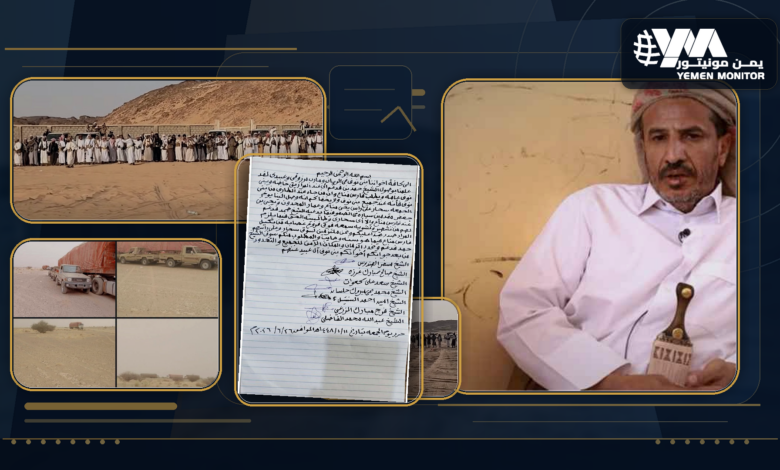
In a position paper titled “The Tribal Nakaf in Al-Jawf: Can the Tribe Break Houthi Dominance and Redraw the Equations of Influence?”, the center stated that the crisis has gone beyond the incident that sparked it, becoming an indication of the tribe’s renewed role in Yemen’s political landscape after years of diminished influence under Houthi rule. As such, its outcome is likely to have a direct impact on the future relationship between the group and the tribes of northern Yemen.
The paper suggested that the most likely scenario consists of the expansion of tribal and political pressure on the Houthis, driven by growing solidarity among tribes and increasing objections to the group’s policies. This would raise the cost of its management of tribal society and restore the tribe’s role as a social and political actor capable of influencing the balance of power, even without sliding into a broad military confrontation.
It added that if the Nakaf succeeds in maintaining its momentum, it may encourage other tribes to reclaim the independence of their collective decision-making and revive their traditions of aiding those seeking protection and defending their customs. This could lead to a widening of tribal movement within Houthi-controlled areas, imposing growing challenges on the group in managing the tribal sphere, which has remained one of the most important pillars of its influence during the war years.
Conversely, the center noted that the second scenario involves the success of tribal and regional mediation in containing the crisis and preventing it from turning into an open confrontation. However, this would not eliminate the root causes of the tension; rather, it would defer them while resentment persists within tribal circles, making the current Nakaf a reference precedent that tribes could rely upon in similar future crises.
As for the third scenario, which the center described as the least likely but most dangerous, it involves the crisis intertwining with a broader military escalation around Marib or on the Saudi border. This could impact the security of Marib Governorate, supply lines, and the strategic axes leading to the Safer region—which houses the most important oil and gas facilities in Yemen—thereby granting the crisis dimensions that transcend its tribal framework to influence the conflict equations in the north of the country.
The center concluded that the importance of the tribal Nakaf lies not only in its field developments, but also in the fact that it may constitute a turning point in the nature of the relationship between Yemeni tribes and the Houthi group, making the outcomes of this crisis an influential factor in reshaping the balances of influence during the upcoming phase.