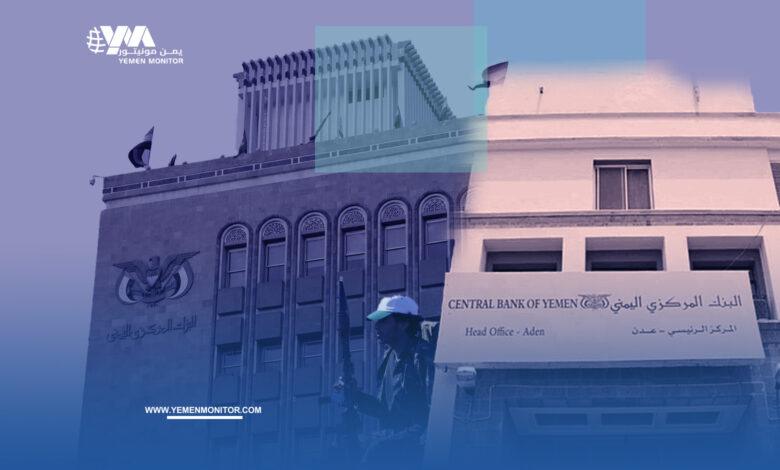
Yemen Monitor / Marib / Exclusive:
Senior Yemeni government sources have revealed to Yemen Monitor that the administration of U.S. President Donald Trump exerted unprecedented pressure on the Sultanate of Oman, successfully derailing joint efforts by Muscat and the Houthi movement to engineer an alternative financial system.
The proposed system was intended to enable banking entities in Sana’a to bypass the Central Bank of Yemen in Aden and the international SWIFT financial network. The U.S. Treasury Department reportedly threatened to isolate Oman’s banking sector and impose severe American sanctions.
The sources, who spoke to Yemen Monitor on condition of anonymity because they were not authorized to speak to the media, said that in May the Houthis sought to connect banking entities under their control to intermediary banks in Muscat, the Omani capital.
The plan aimed to turn Oman into a “back-channel” for settling international remittances and financing letters of credit for major food and fuel importers operating in northern Yemen, without passing through the internationally recognized Central Bank in Aden.
According to the information, the proposed mechanism involved using the overseas cash flows of international and humanitarian organizations as credit guarantees to facilitate import shipments through the port of Hudaidah. The mechanism was also designed to allow the management of “gray” cash pools outside the scrutiny of international and local regulators, giving the Houthi authorities in Sana’a the ability to shield their commercial environment from an impending liquidity crisis.
Yemen Monitor was unable to immediately obtain comment from Omani officials.
According to the sources, Washington conveyed firm messages through diplomatic and security channels to Oman’s Ministry of Foreign Affairs and its central bank, warning against providing any legal or technical cover for Yemeni banks that are subject to sanctions.
The sources further stated that the U.S. Treasury Department and the Trump administration delivered particularly stern warnings to the Omani Foreign Ministry and Central Bank. These messages cautioned against providing any legal or technical framework that would enable the Houthis, or financial and commercial institutions in areas under their control, to circumvent the Central Bank in Aden.
The American message reportedly stated that:
“Any regional financial or banking institution, including Omani banks, that contributes to facilitating the movement of funds for the isolated banks of Sana’a will immediately risk secondary sanctions, including the loss of access to U.S. dollar clearing services and complete exclusion from the global financial system.”
These measures are said to be part of Washington’s strict 2026 strategy to close all “geographical loopholes” that Iran or its regional proxies might use to move funds and ease economic pressure.
The sources indicated that Muscat’s inability to provide an alternative financial safety net would leave major commercial houses in northern Yemen with two options: either fully comply with the decisions of Aden Central Bank and relocate their legal and financial headquarters to the temporary capital in order to secure import operations, or face collapse and exit the market in favor of hybrid exchange companies directly affiliated with the Houthis that operate through cash transactions and smuggling.
In conclusion, the sources argue that Aden’s assertion of banking sovereignty, backed directly by the U.S. Treasury Department, effectively ends the era of unilateral concessions and imposes a new negotiating reality for 2026. Under this framework, “financial and administrative legitimacy” becomes the central foundation for any future settlement or roadmap, replacing the previous emphasis on military and battlefield leverage.