Official Report: 234,000 Families Face Hunger as Worsening Humanitarian Crisis Sweeps Marib in 2026

Yemen Monitor / Marib / Special Report:
Marib governorate (eastern Yemen) is facing a sharp escalation in the humanitarian crisis amid declining living standards and services, with official warnings of a widening gap in basic needs for displaced persons and residents during the current year 2026, due to the collapse of international humanitarian funding and severe climate fluctuations.
An official report issued by the Office of the Ministry of Planning in Marib governorate revealed that the governorate, which hosts the largest population of displaced persons in Yemen, is on the brink of a real catastrophe, with approximately 296,835 families in urgent need of life-saving humanitarian assistance to survive.
The report indicated that hunger indicators in the governorate have recorded a record jump, an increase of 13% compared to conditions in 2024, due to the deterioration of the local currency, rising commodity prices, and the suspension of many relief programs dependent on foreign aid.
63% of Health Facilities Partially Operational
The annual report of the Planning Office revealed a shocking statistic in the health sector in Marib: a partial shutdown of about 63% of health facilities that lack the most basic equipment and maintenance. Meanwhile, vulnerable groups are living in a tragic situation, as approximately 99,879 pregnant and breastfeeding women lack basic healthcare and nutrition services, threatening to increase malnutrition and mortality rates.
Concurrently, 63% of the population lacks safe and sustainable sources of drinking water, which has doubled environmental risks and the spread of epidemics, particularly in displacement camps and densely populated settlements that rely on expensive and unsafe water tankers.
Children Out of School
The report mentioned that at least 6,229 children have dropped out of the educational process and remain out of school due to harsh economic conditions that force families to push their children into the labor market.
It also stated that 47% of displaced children in Marib lack official birth certificates, which poses a silent obstacle to their access to basic services, education, and future mobility.
Continued Displacement and Escalating Suffering
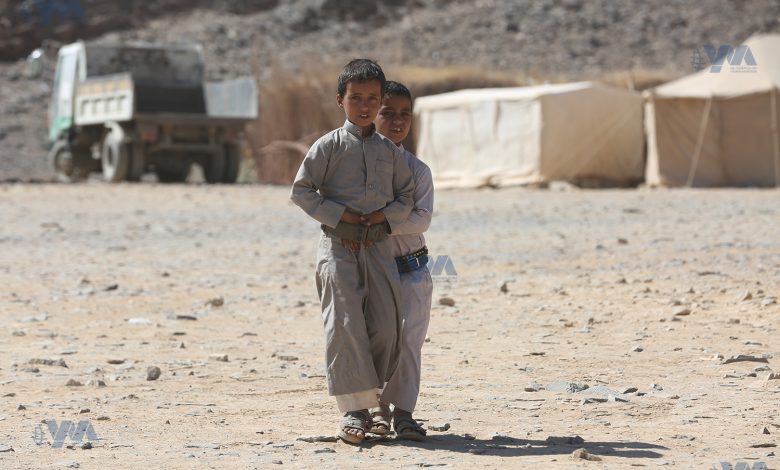
The Planning Office said that the continuous displacement to Marib has become a heavy burden, with 71% of displaced families still living in emergency, dilapidated camps and shelters, and 69% of those living in rented homes currently facing the risk of “forced eviction” by property owners.
Regarding the Office’s efforts, it explained that it has trained 537 staff members in administrative and technical fields, in addition to completing a project to rehabilitate and furnish the Office’s building to raise performance efficiency.
The report reviewed the governorate’s strategic vision for 2026, which aims to move from the framework of “emergency relief” to enhancing sustainable development, digital empowerment, and expanding partnerships with the private sector and international organizations, in an attempt to save what can be saved and ensure a more effective response to the growing humanitarian needs in Marib.