Yemen Monitor / Washington / Exclusive:
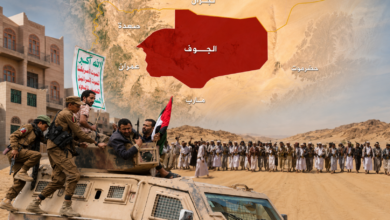
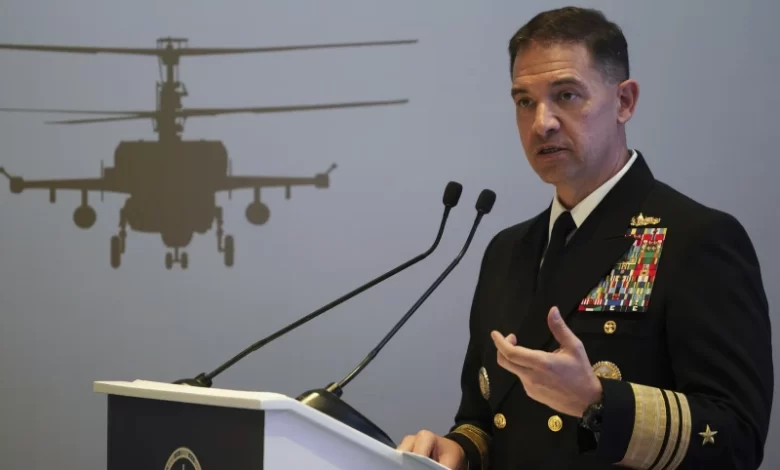
The commander of the U.S. Central Command, Admiral Charles Brad Cooper II, confirmed that the US is keeping the Yemeni file under close scrutiny, warning that the Houthi group is attempting to expand its influence along the Red Sea coast despite the current ceasefire.
In testimony before the Senate on May 14, a copy of which was reviewed by Yemen Monitor, Cooper stressed that the priority is to prevent terrorist groups from exploiting the current changes to reposition themselves and threaten U.S. national security.
Admiral Cooper explained that the Houthi group still maintains military capabilities that pose a direct threat to the interests of U.S. partners in the region.
He pointed to a steady expansion in the group’s influence and its ties with a broad range of “threatening groups” along the strategic Red Sea coastline, placing international freedom of navigation under constant concern.
Regarding the situation on the ground, the U.S. military commander stated that despite the continued ceasefire following Operation “ROUGH RIDER,” Central Command continues to closely monitor developments in Yemen.
He emphasized that this focus is primarily aimed at tracking potential threats targeting U.S. territory or vital interests in the region.
Cooper warned against diverting attention away from the danger posed by other terrorist organizations amid the recent military shifts. He stressed the need for continued joint efforts with regional partners to ensure that “Al-Qaeda in the Arabian Peninsula” does not exploit ongoing changes in the Yemeni landscape.
He added that the top priority is preventing the organization from rebuilding its capabilities and turning Yemen once again into a launchpad for threats against the American homeland.
Admiral Cooper’s emphasis on “vigilant monitoring” in Yemen reflects a restrained American concern over the fragility of the current calm. The “ROUGH RIDER” operation he referenced appears to have drawn new red lines, but it has not completely ended the Houthi threat, especially as the group continues strengthening its coastal presence.
Cooper also stated that Iran is no longer capable of reliably resupplying its regional partners — including Hezbollah in Lebanon, the Houthis in Yemen, and militias in Iraq — with advanced weapons.
He noted that these groups, once considered the “backbone” of regional destabilization, have been significantly weakened following the destruction of Tehran’s arsenal and the severe setback suffered by its nuclear program during the earlier Operation “MIDNIGHT HAMMER.”
Regarding the war with Iran, Cooper said the Iranian regime’s ability to project regional power had effectively collapsed following Operation “EPIC FURY.” He revealed that the intensive military operations succeeded in dismantling what Tehran had built over four decades, opening the door to a “generational shift” in the balance of power in the Middle East.
Admiral Cooper disclosed further details about Operation “EPIC FURY” (OEF), noting that it lasted fewer than 40 days of major combat operations coordinated with Israeli forces. During that period, U.S. forces carried out more than 10,200 air sorties and 13,500 strikes targeting the Iranian regime’s military infrastructure.