Tribal Unrest in Al-Jawf Over Continued Houthi Detention of Sheikh Al-Hazmi and Stalled Mediation

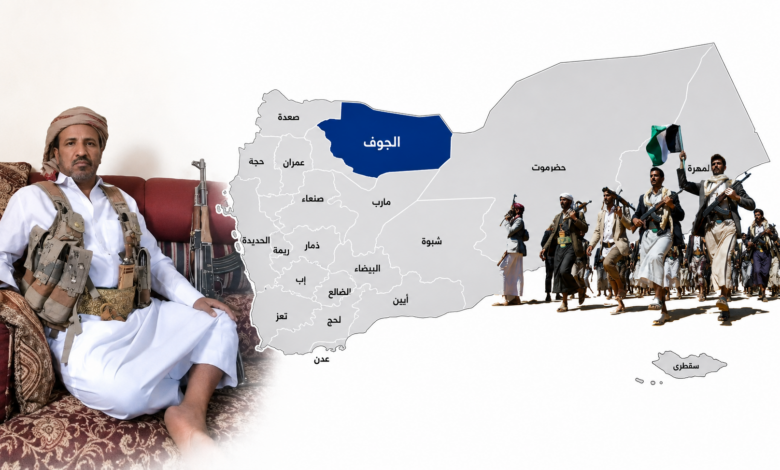
Yemen Monitor / Al-Jawf / Special Report:
The case involving the detention by the Houthi group of prominent tribal sheikh Hamad bin Fadgham Al-Hazmi, along with a woman who sought his protection and claims to be “Mira Saddam Hussein,” continues to dominate tribal circles in Al-Jawf Governorate (northeastern Yemen), amid growing dissatisfaction with the group’s handling of tribal customs and traditions.
Tribal sources told Yemen Monitor that anger and resentment are escalating among the Dahm tribes—which encompass all the tribes of Al-Jawf Governorate—due to the Houthis’ handling of the case and their continued detention of Sheikh Hamad and the woman under his protection for a third consecutive week, with no signs of a resolution or their release.
The sources stated that the tribes of Al-Jawf are awaiting the outcome of a tribal mediation effort led by Sheikh Mansour bin Abdan. On May 19, he requested the removal of the tribal sit-in (“matrah qabili”) in exchange for his commitment to pursue the case and secure the release of both Sheikh Hamad and the woman.
According to the sources, Sheikh bin Abdan—who was outside the country at the time—has yet to return despite repeated tribal demands for his prompt return and fulfillment of his promises, either by following up with the Houthis or publicly declaring the group’s intransigence and calling on the tribes to mobilize and gather once again.
The sources added that the Dahm tribes are awaiting a decisive position from the tribe to which Sheikh Hamad belongs, as it is directly concerned with the matter and holds the authority to escalate the issue by calling for a new tribal gathering demanding the release of the detained sheikh and the woman. The sources emphasized that widespread anger is growing among the tribes due to what they view as the Houthis’ disregard for tribal customs and their marginalization of Al-Jawf’s tribal leaders and elders.
The sources further explained that reports of a Houthi initiative to release the sheikh are merely “leaks” intended to absorb tribal anger and delay action. Regarding the nature of the alleged initiative, the sources said that the Houthis conditioned Sheikh Hamad’s release on his relinquishing responsibility for the woman accompanying him and handing her case over to the group’s security and judicial authorities. This is the same approach reportedly taken in the previous case involving the “Dhubaibi girl.”
Details of the Detention and Failed Mediation Efforts
More than a month has now passed since the case first reached Sheikh Hamad. He had transferred the matter to Sheikh Naji Al-Shaif due to the latter’s tribal influence, but was later surprised to learn that Al-Shaif had traveled abroad for medical treatment, leaving the case unresolved.
On May 12, Sheikh bin Fadgham appeared in a video in front of the disputed residence alongside other tribal sheikhs. He stated that neighbors and local residents knew the woman and that she had lived in the building before being evicted by the Houthis.
The video reportedly angered Houthi leaders, who that same night proposed an initiative to provide alternative housing for the woman elsewhere. Sheikh Al-Hazmi rejected the proposal and immediately left the location.
On May 13, Sheikh Hamad rented a vehicle with the intention of returning the woman to tribal areas in Al-Jawf, but Houthi security forces detained both of them.
In an effort to calm tensions, Sheikh Mansour bin Abdan—one of the sheikhs from Sheikh Hamad’s tribe—offered mediation on May 19. The agreement called for ending the tribal gathering and protest in exchange for his commitment to seek the release of Sheikh Hamad and the woman and to pursue the matter with Houthi leaders in Sana’a. However, more than ten days after the mediation began, the situation remains unchanged, with no apparent progress toward a solution.
As the case enters its second month and Sheikh Hamad and the woman who sought tribal protection remain imprisoned—having spent 17 days in Houthi detention facilities—tribes in Al-Jawf view the situation as an unprecedented development and a serious sign of the group’s disregard for the governorate and its tribes.