Yemen Monitor – Newsroom:
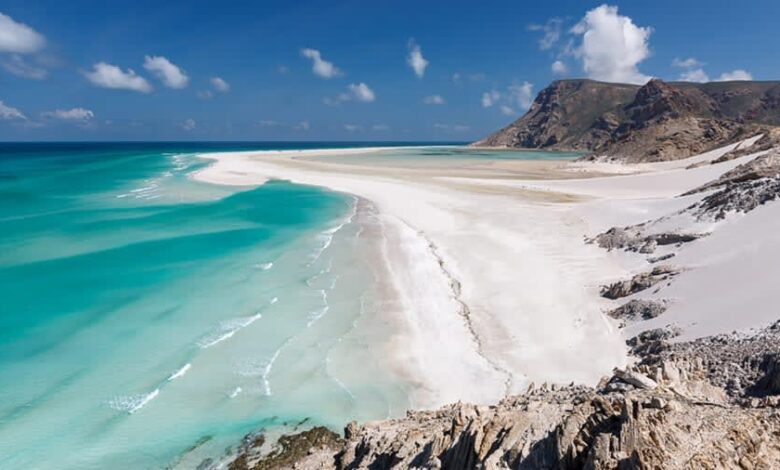
Socotra Island, located in the Indian Ocean off the Somali coast, is one of the most isolated places on Earth. Thanks to its remote location, it has preserved a unique ecosystem for centuries, largely untouched by human interference.
According to a report by NBC News, this island—often compared to the Galápagos Islands—is now facing existential threats that could wipe out millions of years of biological evolution. Conservation experts warn that climate change and human activities are endangering Socotra’s rare natural heritage.
The report notes that the island, roughly the size of New York’s Long Island, is home to 825 plant species—one-third of which are found nowhere else in the world. This includes the aromatic frankincense trees and the iconic dragon’s blood trees that dominate Socotra’s surreal landscape.
Ecologist Kay van Dam, who has worked in Socotra for over 20 years, stressed that climate change is the island’s biggest threat. Prolonged droughts are worsening the impact of past cyclones—such as those in 2015 and 2018—which devastated coral reefs, eroded soil, and led to the collapse of natural habitats.
Van Dam added that endemic trees like frankincense are at risk of extinction. In March, the International Union for Conservation of Nature (IUCN) listed four species of frankincense as critically endangered, and five others as vulnerable. Overgrazing—especially by goats—is further compounding the crisis.
Meanwhile, the island is under mounting pressure from tourism. Its pristine beaches and rare flora attract thousands of visitors each year, placing a heavy burden on its fragile ecosystem. Local activists report environmental damage caused by some tourists, including lighting fires beneath rare trees and disturbing wildlife with drones.
While authorities have capped the number of annual visitors at 4,500, violations persist. Local guides report that some tourists do not adhere to environmental guidelines, endangering sensitive habitats.
Experts fear Socotra could follow the path of the Galápagos, which lost many of its unique species due to over-tourism. They are calling for urgent implementation of strict protection measures before it’s too late.
On a social level, activists have observed a cultural shift among island residents. The influx of outside behaviors is impacting the island’s traditionally conservative society, where people still speak the ancient Soqotri language.
Despite these challenges, Van Dam remains hopeful about saving the island. He praised local initiatives and cooperation with authorities, emphasizing that continued conservation efforts could preserve this natural treasure for future generations.