Yemeni Government Approves 20% Civilian Salary Increase and Pledges Strategic Solutions to Electricity Crisis

Yemen Monitor / Newsroom:
The Yemeni government approved, on Thursday, a 20% increase in salaries for civilian public-sector employees, and pledged to proceed with implementing strategic solutions to address the electricity crisis, affirming that improving public services is a top priority in the current phase.
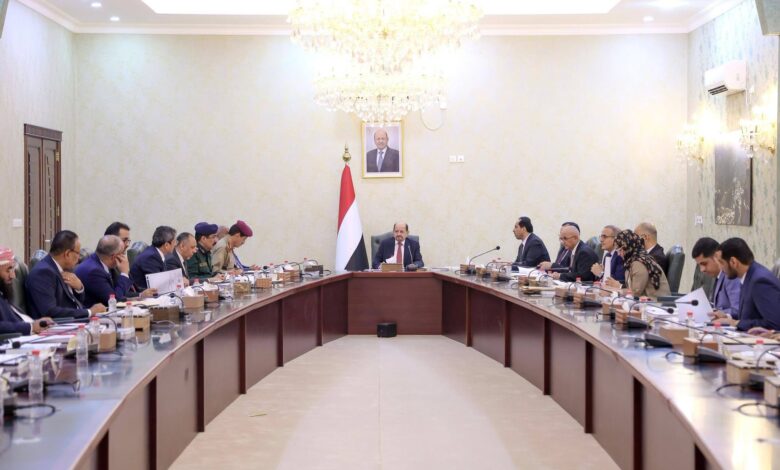
During a Cabinet meeting in the temporary capital Aden, chaired by Prime Minister and Minister of Foreign Affairs and Expatriates Dr. Shaea Mohsen Al-Zindani, the Council reviewed political, economic, and service-sector developments, along with regional and international updates and their implications for Yemen.
The Prime Minister emphasized that the government is working to address the accumulated imbalances in the electricity sector by implementing sustainable solutions to ensure service stability, alongside urgent measures to secure the needs of power generation stations. He noted that the current crisis stems from decades of accumulated problems due to the absence of long-term remedial actions.
The Council stressed that although the government is not responsible for the emergence of these challenges, it bears its national responsibility to address them, and is striving to transition from temporary solutions to strategic reforms that reduce the drain on public resources. It also expressed understanding of the suffering of citizens due to frequent power outages.
The Cabinet praised Saudi support for Yemen, commending the new grant for petroleum derivatives valued at $150 million, allocated for operating power plants. It considered that this would contribute to enhancing service stability, alleviating citizens’ suffering, and supporting economic reform efforts and the state’s ability to meet its basic obligations.
The Council approved the implementation mechanism for the decision to raise salaries of state administrative employees by 20%, clarifying that the increase will also include contractors whose salaries are disbursed from the contracts line item in the general budget.
On the development front, the Cabinet approved the establishment of an agricultural research station in the Socotra Archipelago, aimed at supporting scientific research and developing plant and animal agricultural production. It also approved increasing the resources of the Fund for Encouraging Agricultural and Fisheries Production after incorporating observations and coordinating with the Ministry of Finance.
The Council also discussed service and security conditions in Aden and the liberated governorates, reaffirming the government’s commitment to taking practical measures to alleviate citizens’ suffering and improve the level of basic services. It commended the efforts of security and military agencies in maintaining security and thwarting attempts to exploit peaceful protests to undermine stability.
The Cabinet heard reports from the Ministers of Defense and Interior regarding military and security developments, emphasizing the importance of raising readiness levels and enhancing coordination between military and security institutions to face challenges and combat terrorism and organized crime.
The Cabinet reiterated Yemen’s position calling for strengthening regional security and stability, respecting international law, and settling conflicts through peaceful means, affirming that achieving peace requires respecting state sovereignty, ending support for militias, drying up their sources of funding and armament, and vesting the decision on war and peace solely in the hands of the state.
At the conclusion of the meeting, the Council directed ministries and government agencies to accelerate the implementation of current-phase priorities, redouble efforts in economic and service-related files, and enhance coordination between state institutions to contribute to improving government performance and restoring citizens’ confidence.