Yemen Monitor / Sana’a / Exclusive:
The Houthi armed group is pushing to end the truce and return to war along all front lines if the Iranian aircraft carrying the delegation is not allowed to return to Sana’a Airport and if the airport is not kept open for flights to Imam Khomeini Airport.
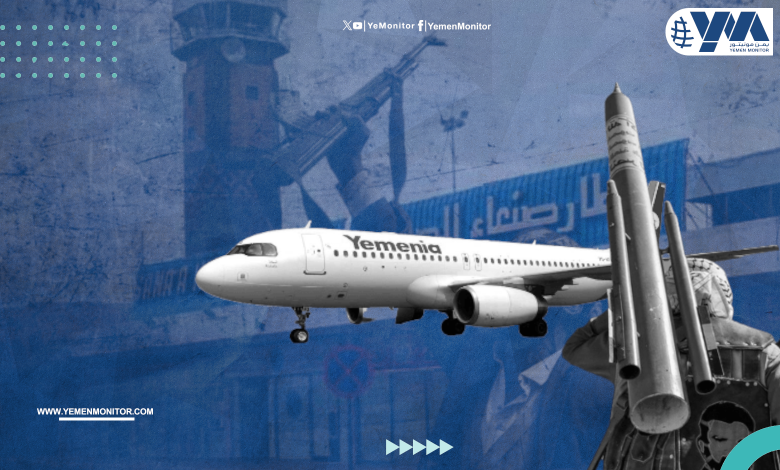
The Houthis had rejected an initiative by Yemeni Presidential Leadership Council to bring back their delegation in Tehran, which had attended the funeral of the assassinated Iranian Supreme Leader, aboard the national carrier Yemenia Airways. They insisted on the return of the Iranian aircraft and the continuation of flights between Sana’a and Tehran.
In a statement issued by its internationally unrecognized foreign ministry, the Houthi group said that “any step” taken by Saudi Arabia and the Yemeni government “will be considered the final shot fired at the de-escalation and ceasefire phase.”
The Houthis believe they have grown stronger within the so-called Axis of Resistance and that the attempt to overthrow the Iranian regime failed after the U.S./Israeli war that began on 28 February; they say the countries of the region must “comply with their demands” and abide by the new rules of engagement they are imposing.
A Houthi source told Yemen Monitor that the return of the Iranian aircraft, which had been scheduled to return on Sunday after most mourners had left the Islamic Republic, was postponed amid fears that it could be struck over Yemeni territory or that Sana’a International Airport could be bombed to prevent its landing, which would mean a return to war.
The Yemeni government warned against operating another Iranian flight to Sana’a International Airport. On Sunday, Presidential Leadership Council Chairman Rashad Al-Alimi said: “Any new Iranian attempt to repeat the flight to Sana’a will constitute a dangerous escalation and a test of the international community’s commitment to Security Council resolutions.”
The UN Security Council is expected to hold a session to discuss the Iranian aircraft that arrived at Sana’a Airport on 3 July and transported the Houthi delegation, as well as more than 200 people from Iran to Sana’a, including Iran’s ambassador to the Houthis, Ali Rezaei.
Rezaei has appeared twice in Sana’a since then: first during a meeting with the movement’s deputy foreign minister and then during a meeting with the head of the Houthis’ internationally unrecognized government. The Houthis thanked Iran for sending the Iranian aircraft and for what they described as efforts to break the blockade.