The Head of the Government Team in the Prisoners’ File: Our Representatives in the “Qahtan” Committee Are Ready, and Any Delay Obstructs the Completion of the Deal

Yemen Monitor / Exclusive / Marib:
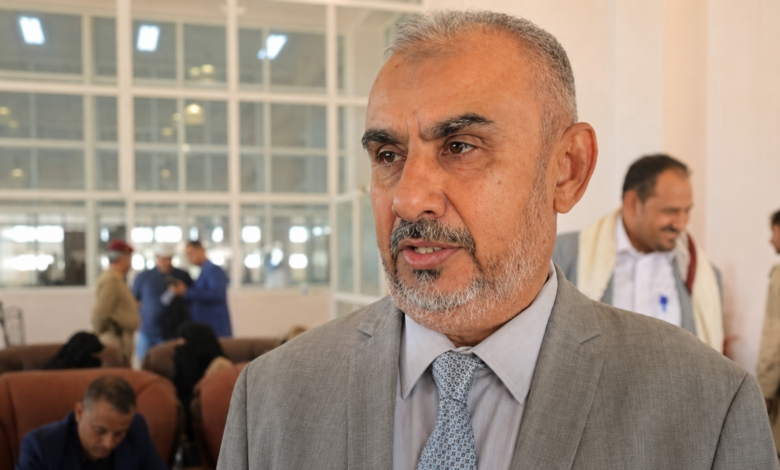
The head of the government negotiating team in the prisoners and detainees file, Hadi Haig, revealed new details regarding the implementation mechanism of the recent prisoner exchange agreement with the Houthi group, which is scheduled for next July.
In an interview with the state-run “Saba” channel, Haig confirmed that the agreement is governed by a strict timeline consisting of five consecutive phases. He noted that the first step begins with revealing the fate of Qahtan in accordance with the approved mechanism, which he emphasized is an essential condition and an integral part of the agreement concluded between the two parties.
He reported that government team member Hassan Al-Qubaishi has been assigned as a representative to the tripartite committee concerning Qahtan, which includes members representing the Houthi group, Qahtan’s family, and the International Committee of the Red Cross (ICRC).
He explained that the committee is ready and waiting for the Houthis to specify the time and route to begin its mission within days, with the aim of visiting him, checking on his wellbeing, and submitting a detailed report on his health condition.
Haig stressed categorically that any obstruction of this visit by the Houthis will lead directly to delaying the implementation of the exchange deal as a whole.
He pointed out that the current deal is the first phase toward completely emptying the prisons, to be followed by four subsequent phases that include searching for missing and forcibly disappeared persons, eventually leading to the exchange of bodies and the formation of a field committee to retrieve them from complex frontlines.
The head of the government team announced that the upcoming deal will include the release of a prominent female human rights activist who has been detained for a long time due to her humanitarian activity.
Steps for Implementing the Deal
Regarding logistical procedures, the head of the government team stated that implementation will involve gathering the released individuals in specific locations in preparation for transporting them to their final destinations, with the ICRC undertaking the task of interviewing each person and verifying their identity and data before boarding the aircraft designated for the operation.
Haig acknowledged the presence of severe difficulties that faced the negotiation rounds due to sharp disagreements over certain names, which caused discussions on some files to last for weeks.
Regarding guarantees against the recurrence of abductions, the head of the government team admitted that current guarantees remain limited and require a genuine commitment, pointing to ongoing understandings with the United Nations and the Red Cross to ensure that the cycle of arrests is not reproduced anew after the deal.
Concerning the file of abducted women, Haig explained that secrecy and the reservations of some families due to social stigma constitute a major obstacle in compiling a complete list of names.
The head of the government team criticized the Houthi group’s continued detention of UN employees and leveling ready-made accusations against them for political pressure, considering that the international community’s inability to protect its staff weakens confidence in the international organization’s ability to address the file of the remaining civilian abductees and disappeared persons.
Haig concluded his remarks by pointing out that the government is working in parallel on preparing human rights, psychological, and vocational rehabilitation programs to help the released individuals reintegrate into society.