Al-Sarari: New Government Must Operate from Within Aden as a Model for Statehood, Order, and Law


Yemen Monitor / Newsroom:
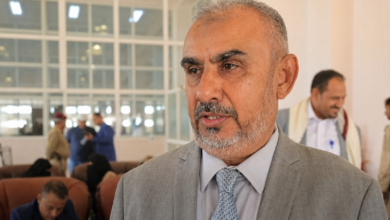
Lawyer and human rights activist Huda Al-Sarari stated that the announcement of the new government formation places the executive branch before grave responsibilities, emphasizing that “there is no longer room for pleasantries or managing affairs from outside of reality.”
In a statement, Al-Sarari stressed that the government is required to operate from within the temporary capital, Aden—not merely as a political title, but as a living model for the state, order, and law that reflects the presence of institutions and the unity of decision-making.
She added that citizens “want to see a state being managed, institutions functioning, and a single decision-making authority that expresses state sovereignty rather than multiple loyalties.” She pointed out that the requirements of this stage have become clear, topped by the activation of legal institutions, the regulation of institutional performance, the regular payment of salaries, and the improvement of basic services.
Al-Sarari emphasized the importance of protecting the unity of political and military decision-making and seriously adhering to the national project. She warned against neglecting the national and moral responsibility toward victims, their families, and all those affected by the war, stressing the need to grant them redress instead of ignoring their suffering or exploiting their pain.
She noted that years of state absence and institutional weakness have created a “dangerous vacuum” filled by militias and de facto forces, which—according to her—has led to the undermining of state prestige and the shredding of citizen trust. She maintained that the new government is tasked with correcting this imbalance rather than reproducing it.
Al-Sarari considered the current government to represent “perhaps the last chance for the survival of the Republic of Yemen,” asserting that the current stage requires repairing what remains, unifying ranks, and restoring the national compass to ultimately extend state influence over all Yemeni territory.
She concluded by saying that Yemenis “deserve a real state and a different future,” emphasizing that this is a pivotal moment: “either the state is built now, or everyone will be lost.”