Yemen Monitor/ Reports Unit/ Agencies:
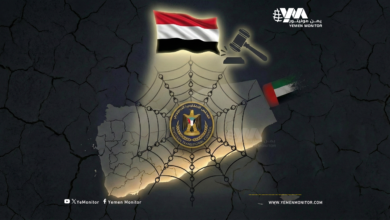
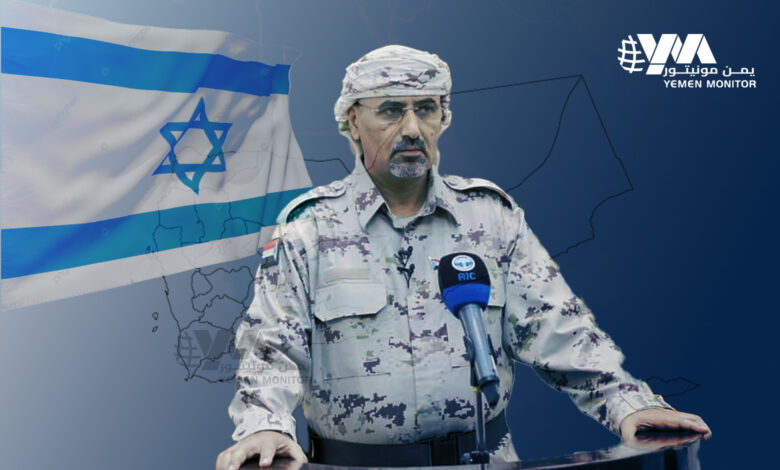
A statement by Aidarous Al-Zubaidi, head of the Southern Transitional Council (STC), expressing his entity’s readiness to join “normalization agreements” with Israel if southern Yemen gains independence has sparked a widespread wave of controversy and anger in Yemeni and regional circles. Analysts see this step as “flirting with Tel Aviv” to advance the Council’s separatist agenda.
Al-Zubaidi’s remarks, made in late September, confirmed that restoring “southern independence” would open the door to normalization, emphasizing that the “Abraham Accords” represent a vital factor for regional peace. This reveals a clear attempt by STC leaders to form “alliances of necessity” to achieve their political goals.
In the past two years, Israel has become globally ostracized due to its war in Gaza, which amounts to genocide, and its military campaigns in Lebanon, Syria, and Iran.
In Yemen, which has itself been subjected to repeated Israeli attacks in its war with the Houthis, Al-Zubaidi’s pro-normalization statement has provoked widespread anger and frustration.
Analysts believe that courting Tel Aviv to push a separatist agenda will only deepen polarization in Yemen, describing it as a miscalculation.
Salah Al-Saqaldi, a political commentator and author who supports secession, stated that Al-Zubaidi’s remarks, in light of Israeli atrocities in Gaza, are provocative.
He explained to The New Arab that “this rhetoric places Southerners and the STC in the position of being pariahs in the eyes of the Arab people.”
He added that Al-Zubaidi’s normalization rhetoric is likely to create more enemies for the Southern cause, at the expense of some regional and Arab solidarity achieved in recent years.
The STC’s Limited Options
Mohammed Al-Same’i, a political journalist based in Taiz, told The New Arab that the STC’s options for pushing its separatist agenda are limited. For this reason, the Council has resorted to showing its willingness to accept normalization with Israel as a strategy.
The journalist indicated that this direction reflects the significant difficulties the STC faces in achieving its goals of restoring an independent state in the south.
He said: “It cannot be denied that the STC is supported by the UAE, and that the UAE is moving towards normalization with Israel. Therefore, it is natural for the STC’s rhetoric to align with the UAE’s strategy.”
Al-Same’i suggests that the STC first needs to present a genuine and effective developmental model that citizens in southern Yemen can be proud of.
He concluded: “This is the best way to gain broad popular support. All other attempts that do not serve the people will fail to win the hearts of civilians.”
Tangible Israeli Role in Southern Yemen
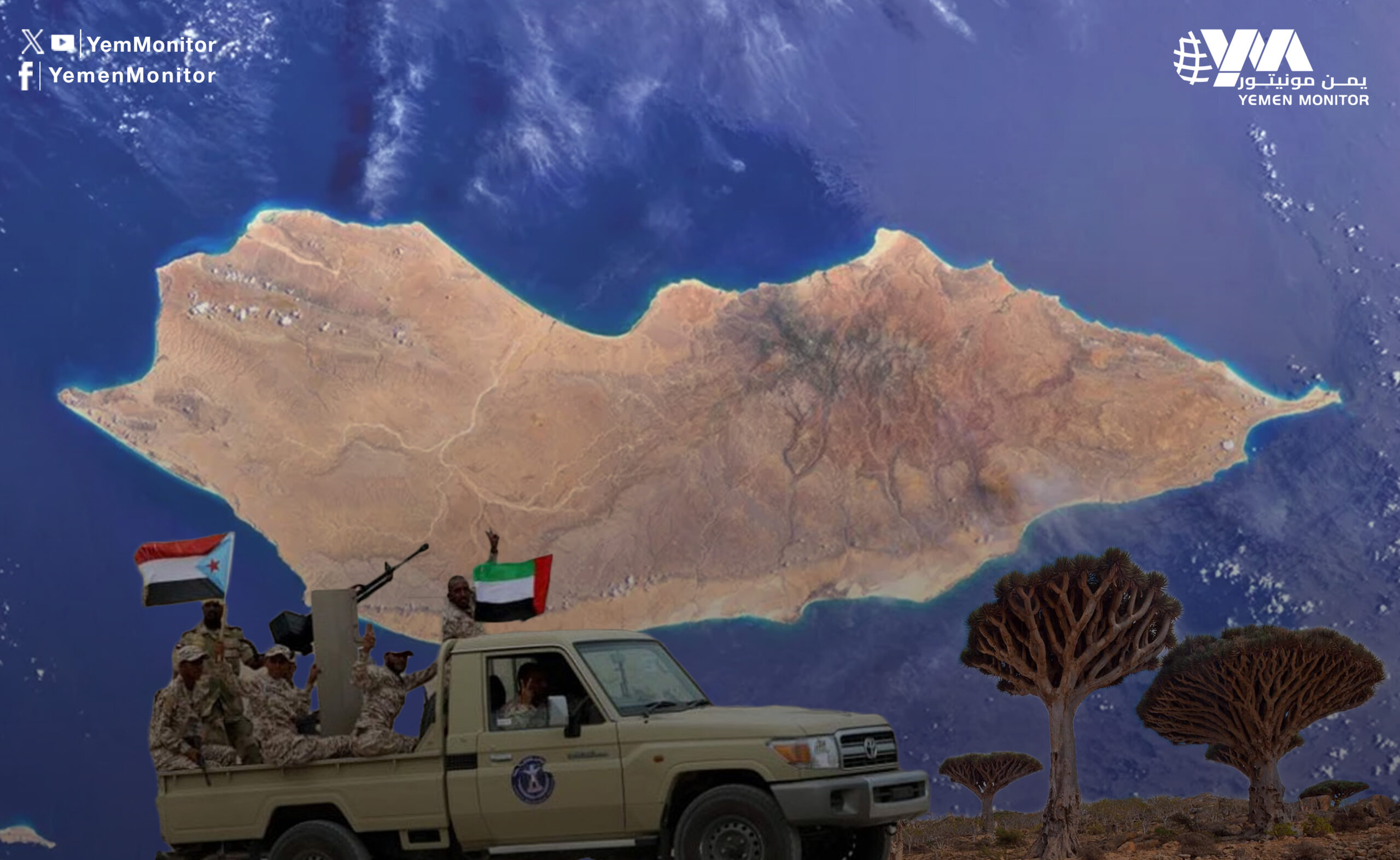
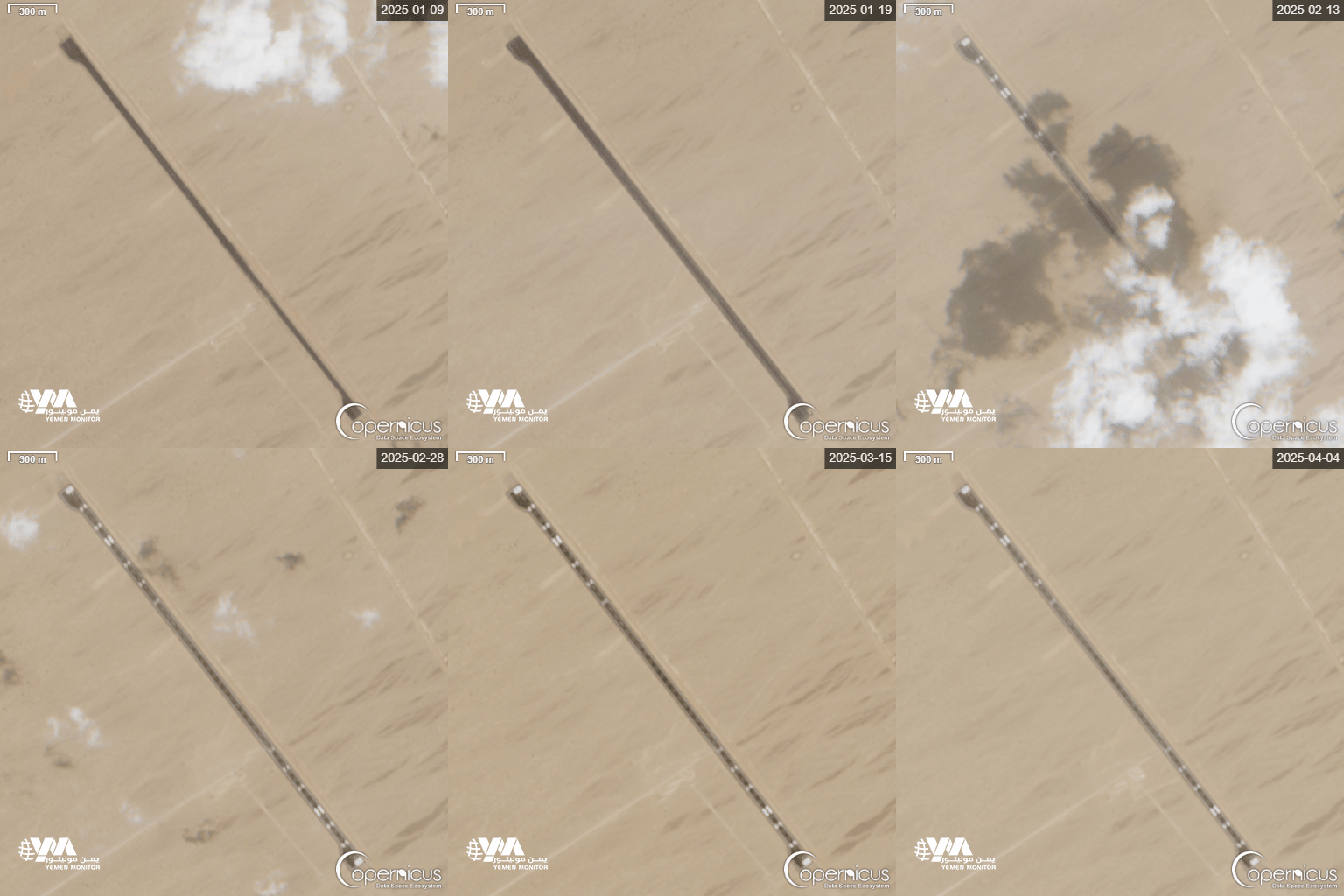
A recent report revealed that UAE allies, including Israel and the US, have established and expanded military and intelligence bases on the Socotra islands, which are controlled by the STC.
The report indicated that Israeli officers have worked on the ground on the islands, and that Israeli radar systems and other military and security devices allow the UAE to monitor and thwart attacks launched by the Houthis.
Since late 2023, Iran-backed Houthis have launched missiles and drones at Israel in solidarity with the Palestinians and have targeted ships linked to Israel.
The report, published by Middle East Eye, stated that “the UAE and Israel have an intelligence-sharing platform known as ‘Crystal Ball,’ through which they ‘design, deploy, and enable regional intelligence enhancement’.
In the same context, a media delegation, including Israeli journalist Jonathan Spyer, arrived in Aden this year and met with officials from the STC. Spyer was accompanied by an STC general, visiting front lines in Al-Dhale’a province, where the Houthis and the STC have been engaged in frequent clashes and skirmishes over the past years.
Military Support in Exchange for Normalization
In a conversation with Spyer, a military commander named Abdullah, a general in the STC, stated that the Houthis are Iran’s proxy, and confronting them requires modern weapons. He mentioned that the STC needs “light and heavy machine guns, air defenses, reconnaissance drones, counter-air capabilities to target low-flying drones, and night vision equipment,” among other things.
The details of the visit sparked fierce controversy in Yemen, with many seeing it as a step towards normalization with Israel. Others argued that the STC was unaware of the Israeli journalist’s nationality.
Israeli Role in Eliminating Opponents
Furthermore, a report in American media this month revealed an Israeli role in removing opponents of the UAE and the STC.
Israelis played an indirect role in shaping and organizing the STC’s Security Belt forces, with the UAE hiring retired Israeli officers from foreign security companies to train Security Belt personnel in Abu Dhabi.
An Israeli mercenary also participated in an assassination program that began in 2015, targeting several figures opposed to the UAE and the STC in Aden. This enabled the UAE-backed separatists to expand their presence and weaken their opponents in the south.Today, they hold the upper hand in Aden and most southern provinces.
Shifting Attitudes Towards the STC
Ayman Ahmed, a Houthi supporter in Sana’a, used to believe that the people of the south had the right to secede if they wished, considering their struggle legitimate. However, today, he has changed his mind, like many others.
As the separatist leadership in southern Yemen speaks openly about normalizing relations with Israel, Ahmed now believes the separatists have become enemies. This is a widely held position in Yemen.
He stated to The New Arab: “In recent years, I would not have supported any armed confrontation with our brothers in the south. Once the separatists expressed their willingness to normalize relations with Israel, I considered it a betrayal. Fighting the traitor is a duty.”
Since July of last year, Israel has killed and injured hundreds of Yemenis in Houthi-controlled provinces. Recent strikes in September of this year left more than 200 civilians dead and wounded.
Ahmed, a resident of Sana’a, like many Yemenis, believes that the Houthis’ support for Gaza will be remembered with pride for years to come.
Ali Nasser, a resident of Shabwa province in southern Yemen, was a strong supporter of southern secession and saw Al-Zubaidi as an inspiring leader for those seeking independence from the north.
Nasser said: “We (the separatists) are prepared to engage in any political or military activity to restore our independent state in the south. The only thing we cannot do is stand with Israel […] to accelerate southern secession.”
He added: “We consider the presence of any northern Yemeni forces in the south as an occupation. Therefore, I see no wisdom or sense in befriending a foreign occupier to help us get rid of a neighboring occupier. No occupier can be trusted.”