Yemen Monitor / Marib / Newsroom:
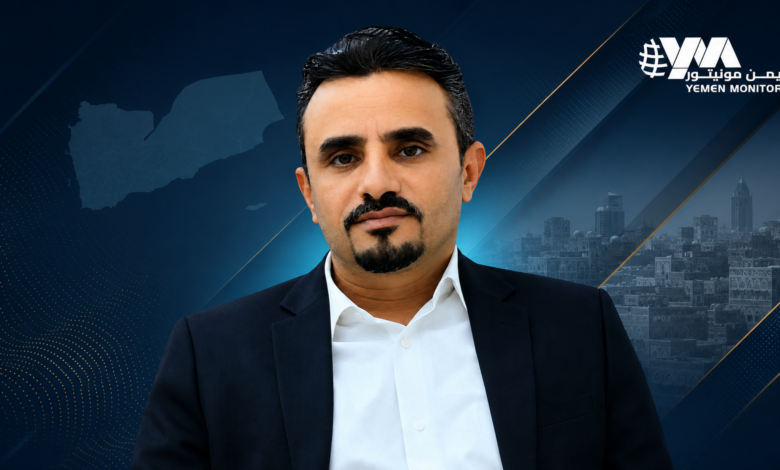
Mohammed Al-Jumaei, an adviser to Yemeni Minister of Industry and Trade, said that the worsening hunger crisis in areas controlled by the Houthi movement is a direct result of what he described as systematic economic policies pursued by the group since it took control of state institutions. He said the slogan “I Am Hungry” now clearly reflects the scale of the economic collapse affecting millions of people.
In an exclusive interview with Yemen Monitor, Al-Jumaei said that Yemeni expatriates sent approximately $9 billion in remittances during 2025, but those transfers failed to improve living conditions in Houthi-controlled areas. He argued that the total value of remittances exceeded the combined revenues Yemen could generate from oil and gas, foreign aid, and international deposits, but said the Houthis’ economic policies, continued resource extraction, and the imposition of levies prevented the funds from translating into improved living standards.
Al-Jumaei said the Houthis had established a parallel economy built on three main pillars:
- Expanding black markets to replace the formal economy.
- Marginalizing established companies and commercial families while replacing them with businesses and individuals loyal to the group.
- Creating a new class of war profiteers who accumulated wealth during the years of conflict.
He argued that these policies have deepened poverty and increased hunger, claiming that the Houthis view the worsening humanitarian crisis both as a tool for consolidating their control and as a means of attracting international humanitarian assistance while attempting to control its distribution through their own institutions.
At the same time, Al-Jumaei said Yemeni society has developed effective community solidarity initiatives. According to him, expatriates and local residents have independently financed public service and development projects, including road construction, water supply projects, support for schools, and teachers’ salaries, outside Houthi-controlled institutions. He said these efforts have helped preserve essential services and strengthen the resilience of local communities.
He further claimed that the Houthis have sought to extend their influence over these initiatives by intervening in their implementation or attempting to claim credit for them, describing this as evidence of the group’s desire to control all available resources and community-led projects, including those funded privately by citizens.
The Industry Ministry adviser called for greater attention to the suffering of civilians living in Houthi-controlled areas, urging that their concerns be conveyed to government authorities and international organizations. He also called for practical measures to alleviate the humanitarian crisis and to expose what he described as the consequences of economic policies that have turned the economy into a tool for sustaining war rather than serving the population.