Yemen Monitor / Newsroom:
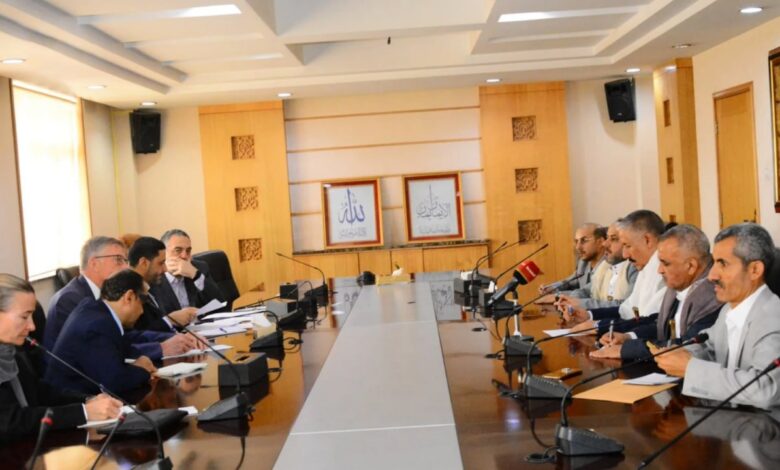
On Monday, Antony Hayward, the Military Advisor to the UN Special Envoy for Yemen and Chairman of the Redeployment Coordination Committee (RCC), who is currently visiting Sana’a, met with Houthi leader Ali Al-Moshki, appointed by the group as the head of its team in the RCC. The meeting was held in the presence of the Director of the Envoy’s Office, Mohammad Al-Ghannam.
According to media outlets affiliated with the group, the meeting discussed the work plan of the new UN Envoy’s office, especially after integrating the mandates of the United Nations Mission to Support the Hudaidah Agreement (UNMHA) into the Office of the Special Envoy.
The Houthi leader criticized the UN’s role, considering that the work plan for the new mechanism “came late,” and accused the internationally recognized government of boycotting the committee’s work and seeking to ignite the situation on the ground, as he put it.
The Houthi leader claimed that the United Nations deals with his group with “complete coldness and a lack of seriousness,” adding that the international organization had reneged on its commitments in the Stockholm Agreement regarding the Hudaidah file, which involves lifting restrictions on ports, rehabilitating them, and transferring the United Nations Verification and Inspection Mechanism (UNVIM) from Djibouti to the western Yemeni ports under Houthi control.
The Houthi leader warned against the Israeli presence in the “Somaliland” region, considering that this presence negatively affects maritime security in the Red and Arabian Seas, in a continuous attempt by the group to link regional files to the ongoing escalation in the waterways.
On March 31, the Security Council terminated the work of the Redeployment Coordination Committee in the Hudaidah Agreement and entrusted its duties to the Office of the UN Envoy to Yemen.
Through this new path, the Envoy’s office aims to continue coordination with the Yemeni parties through joint communication channels to maintain calm, stability, de-escalation, and maritime security, according to the concluding statement of his meetings with representatives of the Military Committee in Amman at the beginning of this June.
The statement mentioned that the meeting discussed field developments in Yemen and the region, focusing on plans for a sustainable ceasefire, maritime security, and the practical steps necessary for de-escalation, at a time when the United Nations is striving to prevent the collapse of the stalled peace process.
The UN Envoy had concluded (on June 10, 2026) a high-level technical meeting in the Jordanian capital, Amman, which brought together representatives of the Military Coordination Committee from the legitimate Yemeni government and the leadership of the Joint Forces.