After the London Meetings: What Is Presidential Leadership Council Member Al-Alimi Bringing Back for Yemenis?

Yemen Monitor / Newsroom:
Yemeni Presidential Leadership Council member Dr. Abdullah Al-Alimi has concluded a multi-day visit to London that focused on rallying British support against the Houthi group. The visit coincided with escalating tensions over Iranian aircraft that landed twice at Sana’a and Hudaidah airports without coordination with the internationally recognized government or the Saudi-led coalition—the first such incidents since 2015.
Originally scheduled to participate in the Chatham House Conference, Al-Alimi used the visit to hold a series of high-level political and military meetings in the British capital.
He met with UK Minister of State for the Middle East Hamish Falconer and Minister for the Armed Forces Louise Sanderson-Jones, where discussions centered on Yemen’s security and military situation and on strengthening the country’s defense capabilities.
Al-Alimi also held talks with Leader of the House of Commons Sir Alan Campbell, Tahir Ali, Chair of the UK All-Party Parliamentary Group on Yemen, and Rob Dixon, Director for the Middle East and North Africa at the UK Foreign, Commonwealth & Development Office. He additionally met with Arab ambassadors and media representatives in London, emphasizing the need for a firm international stance in support of Yemen’s internationally recognized government to secure the Red Sea and confront Houthi threats, which he described as being backed by Tehran.
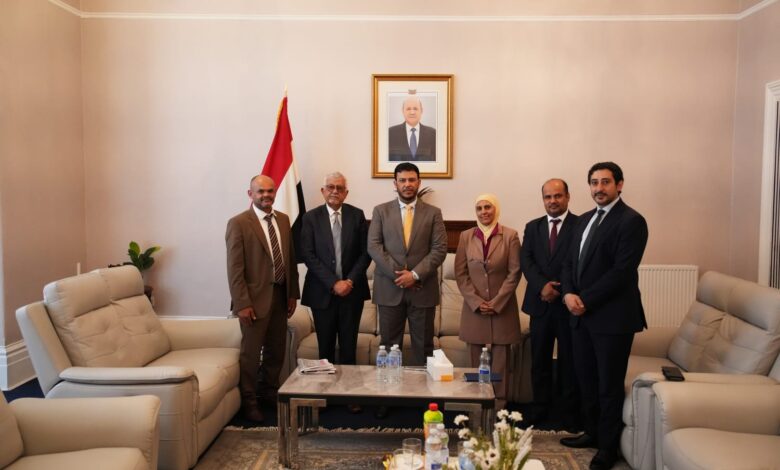
He concluded his visit by meeting with members of Yemeni diplomatic mission in London, who have been facing severe financial and professional hardships due to delays in the payment of salaries and benefits caused by Yemen’s ongoing economic crisis.
Al-Alimi acknowledged the difficulties faced by diplomats and locally employed embassy staff, promising that the country’s political leadership and government would work to resolve their situation and pay their overdue financial entitlements as soon as possible despite limited resources, enabling them to continue carrying out their national responsibilities abroad.
The United Kingdom is known as the “penholder” on Yemen at the UN Security Council, giving it a particularly influential role in drafting Security Council resolutions and statements related to Yemen.
Britain also played a prominent role during the Battle of Hudaidah, using political, diplomatic, and UN channels to help halt the offensive on the strategic western governorate overlooking the Red Sea, home to the last major ports under Houthi control and the group’s principal maritime access points.