Yemeni Government Closes All Airports Until Further Notice as Confrontation with Houthis Escalates

Yemen Monitor / Newsroom:
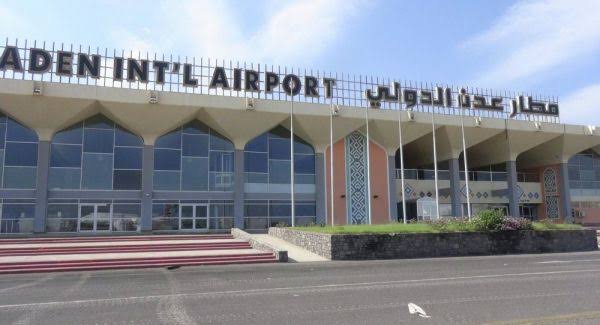
The Civil Aviation and Meteorology Authority in the temporary capital Aden announced on Monday the closure of all airports in the Republic of Yemen to air traffic until further notice, a step taken following escalating tensions related to Sanaa International Airport, which lies within Houthi-controlled territory.
In a circular addressed to airlines and international organizations operating flights to and from Yemeni airports, the authority stated that “all airports in the Republic of Yemen are closed to air traffic until further notice,” confirming that the decision takes effect immediately.
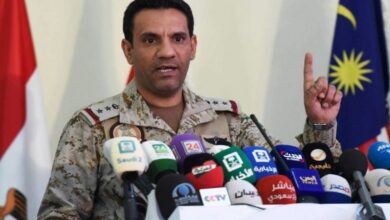
The decision came hours after the Yemeni Ministry of Defense announced that the armed forces had targeted the runway of Sanaa Airport to prevent the landing of an Iranian aircraft that it said was heading to the Houthi-controlled airport.
In a statement, the ministry added that the Houthi group “prevented Yemeni national aviation from landing at Sanaa Airport and insisted on allowing the Iranian aircraft to violate the territory of the Republic of Yemen,” considering that targeting the runway was aimed at preventing the aircraft from landing, and accusing the group of being “backed by the Iranian regime.”
In a related development, the Yemeni government announced the permanent convening of the Council of Ministers to monitor what it described as “Houthi escalation” and to take necessary measures to protect the country’s sovereignty.
This came during an extraordinary meeting of the Council of Ministers in the temporary capital Aden, chaired by Prime Minister and Minister of Foreign Affairs and Expatriates, Sha’ei Mohsen Al-Zandani, dedicated to discussing recent developments, foremost among them the reception of an Iranian flight at Houthi-controlled Sanaa Airport.
The government said in a statement that operating the flight constitutes “a challenge to national sovereignty, a violation of international law and Security Council resolutions, and a threat to Yemen’s security and regional stability,” adding that the decision for permanent convening came after “exhausting initiatives and facilitations” it had offered to avoid escalation, amid what it described as the Houthis’ insistence on rejecting legal solutions and continuing to invite external interventions.
For his part, Chairman of the Presidential Leadership Council, Rashad Al-Alimi, stated that he had directed that priority be given to protecting civilian lives, safeguarding public property, and not expanding the scope of confrontation, affirming that the state “will not allow any aircraft to violate Yemeni airspace in the future, whether through Sanaa Airport or any other airport.”
Al-Alimi explained in a statement that his decision came in his capacity as the Supreme Commander of the Armed Forces, and after completing military, security, and political assessments, with the aim of sparing Yemenis any escalation that serves, in his words, “Iranian interests” in the region.
He emphasized that the decision “was not a retreat from the state’s duty to protect its sovereignty, nor leniency toward any violation,” but rather a “responsible sovereign decision” taken after the armed forces had proven their readiness to defend the nation’s sovereignty, while ensuring civilians and public property were spared any risks.
Al-Alimi pointed out that the armed forces were at the highest state of readiness and carried out defensive measures by targeting the runway of Sanaa Airport, considering that this was done to protect national sovereignty and prevent the imposition of a fait accompli outside the framework of the constitution and the law.
He also accused the Houthi group of rejecting initiatives and mediations aimed at containing escalation and insisting on operating flights he described as unlawful, holding the group directly responsible for the repercussions of the escalation, while also holding Iran responsible for its continued support of the Houthis.