Tribal Reinforcements Continue Arriving at Al-Rayyan Gathering Site in Al-Jawf Amid Houthi Military Alert

Yemen Monitor / Al-Jawf / Exclusive
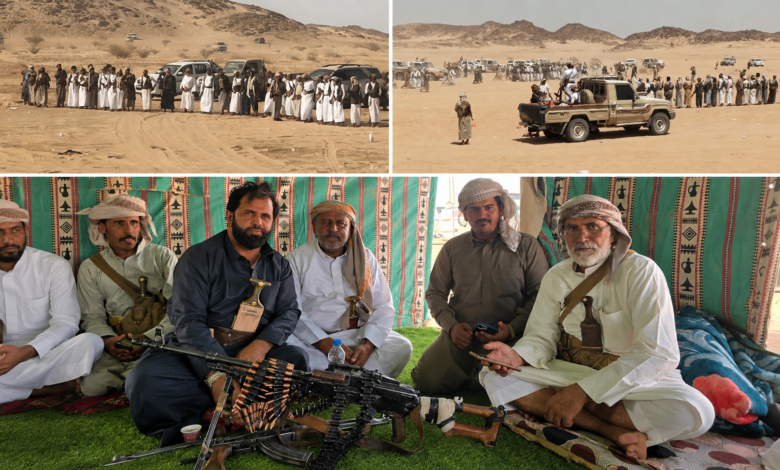
Al-Jawf Governorate in northern Yemen has witnessed an unprecedented level of military and tribal tension for the fifth consecutive day, as large tribal contingents from across Yemen continue to converge on the Al-Rayyan area east of the governorate. The mobilization comes in response to a tribal call to arms (“nakaf”) issued by Sheikh Hamad Fadgham over the treatment he and his lahiqah (a woman who sought his and his tribe’s protection) allegedly received at the hands of the Houthis in Sana’a, while the group has intensified its military and security deployments.
Tribal and local sources told Yemen Monitor that new delegations from several governorates, including tribes from Al-Mahrah and Nahd tribe, arrived at the Al-Rayyan tribal encampment of the Dahm tribe over the past several hours. They joined earlier arrivals from the Nihm tribes (including Al-Hanashat and Al Dhahak), Al-Haymatayn, Dhu Mohammed, Al-Amalisa, and Al Hamd, in what observers describe as an expanding display of cross-regional tribal solidarity.
The sources added that the assembled tribes have taken an important organizational step by appointing Sheikh Faraj bin Hajrah Al-Marzouqi as the overall commander of the tribal encampment. The appointment is intended to unify leadership, organize the tribal mobilization, and coordinate future escalation against the Houthi movement.
Brigadier General Abdullah Al-Hamzah, commander of the 213th Brigade, which is deployed in the Jawas sector—where the tribal gathering falls within its area of operations under the Yemeni Army’s Sixth Military Region—called for the rapid formation of a joint tribal and security committee composed of tribal elders and local leaders. He said the committee should oversee the incoming crowds and prevent individual acts such as road blockages or attacks on private property.
The brigade commander also called for the establishment of guard and observation posts to report any disorder immediately, stressing that “the success and strength of the tribal gathering lie in its discipline, its adherence to tribal customs and the law, and its protection of people’s dignity and interests.”
According to the sources, the crisis began when Houthi leaders detained a woman identified as Mira Saddam Hussein, who had previously sought refuge with the tribes of Al-Jawf after a Houthi official named Faris Manaa allegedly seized her home. Tribal anger intensified after the Houthis detained Sheikh Hamad Fadgham, who had traveled to Sana’a to negotiate the woman’s release through mediation. The tribes viewed his detention as a “black shame” (ayb aswad), describing it as a grave violation of longstanding Yemeni tribal customs and traditions.
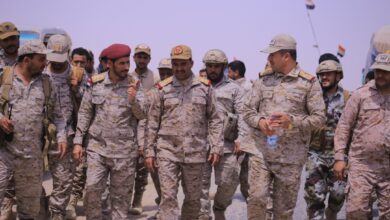
Meanwhile, the Houthis have placed their forces in Al-Jawf on heightened military and security alert. Media outlets and activists affiliated with the group have circulated photographs showing Houthi commander Ali Hussein Al-Houthi—the son of the movement’s founder and the commander of the Emergency Forces and Road Security—inspecting units deployed in the Al-Jawf desert in areas under Houthi control.
Ali Hussein Al-Houthi is also reportedly linked to the case involving Sheikh Hamad Fadgham and the detained woman, as he is alleged to have been among those who compelled Fadgham to make public statements after his release from prison, including withdrawing his claims regarding the woman under his tribal protection.