Yemeni Government and UNESCO Discuss Heritage Protection and Enhanced Partnership in Culture

Yemen Monitor/Newsroom:
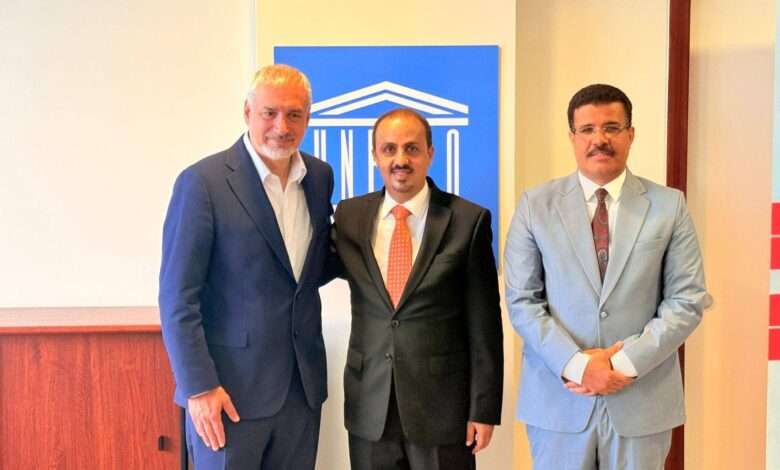
The Yemeni government, represented by the Minister of Information, Culture, and Tourism, Muammar Al-Eryani, today discussed with the Deputy Director-General of UNESCO, Ernesto Ottone, various aspects of joint cooperation in safeguarding Yemen’s tangible and intangible cultural heritage, protecting archaeological sites and historic cities, and strengthening the partnership in cultural fields.
During the meeting, Al-Eryani called for escalating the issue of the Houthi militias’ kidnapping of four UNESCO staff members between 2021 and 2024. He emphasized that these crimes represent a blatant violation and necessitate broad diplomatic, political, and media action, warning that silence has encouraged the Houthis to commit further abuses.
The Minister also warned against the Houthis’ exploitation of some archaeological sites for weapons storage, which threatens the cultural heritage inscribed on the World Heritage List. He praised the projects implemented by UNESCO in Yemen, calling for an expansion of cooperation and greater support for heritage preservation projects and the recovery of looted artifacts.
For his part, the Deputy Director-General of UNESCO affirmed that the issue of the kidnapped staff members held by the Houthis is a top priority for the organization. He noted that coordination with the United Nations and relevant international bodies is continuing to ensure their safety and release.
Ottone expressed UNESCO’s readiness to fund new projects for the protection of archaeological sites in liberated areas. He commended Yemen’s accession to all international agreements concerning the culture sector, as well as the national efforts made to preserve heritage.
He also praised Yemen for listing a number of smuggled artifacts in UNESCO’s “Virtual Museum of Looted Objects,” confirming the organization’s willingness to train Yemeni personnel in combating the illicit trafficking of antiquities and support institutional capacities in this vital field.