Yemen Monitor / Agencies / Telegraph:
The number of oil tankers shipping crude through the Red Sea is increasing as shipping companies lose hope that the Strait of Hormuz will reopen anytime soon.
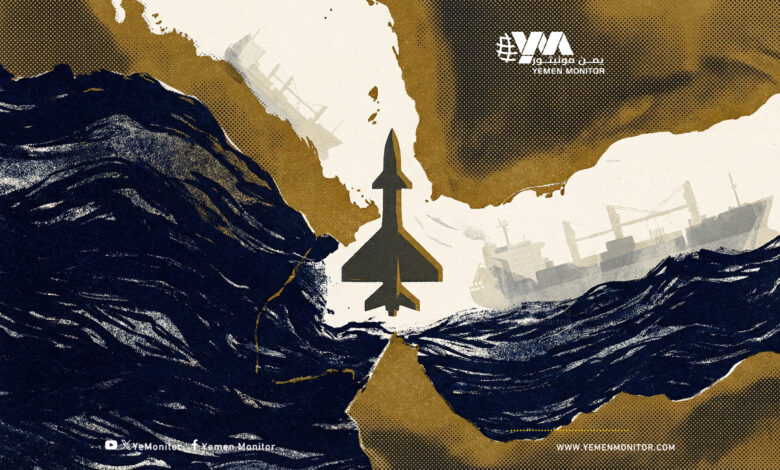
According to analysts at Lloyd’s List, more than 1,260 vessels ventured to face the threats of Houthi rebels by crossing Bab el-Mandeb Strait during the month of March. This represents the highest toll since January 2024, when Houthi leaders escalated their attacks on ships passing through the 20-mile-wide waterway located between Yemen on the Arabian Peninsula and Djibouti in Africa, following the Israeli invasion of the Gaza Strip.
This strategic waterway, which ships must navigate to connect Asia and Europe via the Suez Canal, saw a 66% increase in oil tanker traffic during March, with these numbers continuing to rise in April.
Richard Meade of Lloyd’s List noted that this trend reflects an increase in crude shipments from the Saudi port of Yanbu on the Red Sea. These shipments have averaged 3.6 million barrels per day in recent weeks, equivalent to 20% of the volume of oil that was exiting the Gulf via the Strait of Hormuz before the outbreak of the war with Iran.
Saudi Arabia is intensifying its exports via Yanbu using a 750-mile pipeline built in the 1980s to avoid what was then known as the “Tanker War” in the Gulf during the height of the Iran-Iraq War.
However, operations in the Red Sea are not without risk. While Houthi attacks on maritime shipping declined following the implementation of the Gaza peace plan last October, the Tehran-backed rebels engaged in the Iranian conflict in March, launching missiles from Yemen toward Israel.
In response, leading container shipping lines—including Maersk, Hapag-Lloyd, and CMA CGM, which had begun a pilot return to the Suez Canal earlier this year—rerouted their vessels around Africa once again, adding up to two weeks to voyage times.
At the same time, the flow of ships through the Strait of Hormuz has dropped to its lowest levels since the start of the war. Only 35 ships crossed during the week ending Tuesday, less than half the level of the previous week, amid blockades and obstructions imposed by Tehran and Washington; approximately 70% of those ships were linked to Iran.
Even with the diversion of Saudi exports to Yanbu and increased oil shipments from the United States, global crude supplies remain down by nine million barrels per day.
Mr. Meade stated that ship owners whose vessels are still trapped in the Gulf have largely lost hope of recovering them in the near future, given the state of “paralysis” surrounding the current situation.
Lloyd’s List estimates that even if the Strait of Hormuz were to reopen tomorrow, it would take until at least September for tanker traffic to return to normal. If mines are found in the waterway, intermittent disruptions could easily extend into 2027.
Lloyd’s List also reported that the desperation to move oil out of the Gulf has led to the chartering of several ships—previously operating as part of the “shadow fleet” for Iran and other sanctioned countries—to transport legal shipments through the Strait of Hormuz.
The institution added that the Comoros-flagged tanker “Helga,” which served Venezuela illegally for five years, set sail from Basra in Iraq last Monday carrying 1.7 million barrels of crude.