Yemen Monitor / Analysis Unit / Exclusive:
At a time when regional tensions are boiling under the weight of the “2026 Iran War,” the waterways off the Yemeni coast awoke on Saturday, May 2, 2026, to a suspicious security incident that has reshuffled the deck in the Gulf of Aden.
The tanker MT Eureka, managed by the Sharjah-based “Royal Shipping Lines” (UAE), was subjected to a sudden hijacking off the coast of Yemen’s Shabwa governorate and swiftly diverted toward Somali waters. This incident doesn’t just reopen the door to the specter of piracy; it confronts the region with burning questions about the identity of the perpetrators: Are they pirates seeking ransom, or proxies executing a “chokehold on the straits” agenda?
Ambush at “Qana”: The First Moments and Suspicious Details
The operation began around 5:00 AM Yemen time when masked gunmen boarded the Togo-flagged tanker while it was sailing near the strategic Qana oil port in Shabwa. The armed group seized full control and forced the crew to immediately change course southeast, cutting across the Gulf of Aden toward the rugged Somali coast.
The fate of the crew remains unknown, as does whether a ransom—typically ranging from hundreds of thousands to millions of dollars—has been demanded.
Technical data reveals the MT Eureka is not a supertanker; it is only 88 meters long with a gross tonnage of about 2,000 tons. Its relatively small size made it an easy target for the high-speed boats used by the hijackers. This suggests the operation was carried out with intelligence precision, monitoring the ship’s movements and vulnerabilities—a level of sophistication historically lacking in Somali pirates, who traditionally focused on commercial or fishing vessels closer to their own shores rather than Yemen’s.
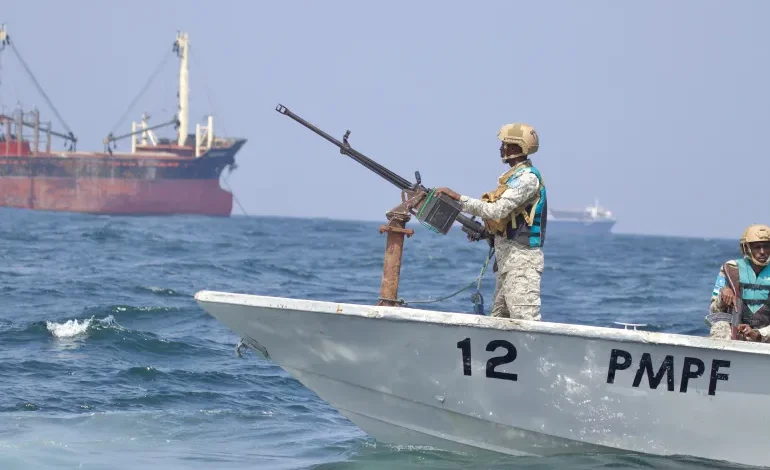
According to security officials in Somalia’s semi-autonomous Puntland region, the hijackers set out from a remote coastal area near Qandala on the Gulf of Aden to reach the waters off Qana where the seizure occurred.
While the Yemeni Coast Guard confirmed the incident, the speed at which the ship was diverted toward Somalia raised eyebrows. The route was clearly designed to move the vessel out of reach of any potential Yemeni or international military intervention, taking it into a “gray zone” where the interests of smuggling networks and transnational militias intersect. By Sunday, the Yemeni Coast Guard reported the tanker was entering Somali territorial waters, noting that their patrol boats could not catch up due to operational constraints and sea conditions.
The Functional Alliance: Houthis and Somali Networks
Security experts believe the MT Eureka operation bears the hallmarks of a “Double Corridor” strategy linking the Houthi movement with armed networks in the Horn of Africa. Intelligence reports from 2026 point to a “strategic functional partnership” where roles and logistics are exchanged to carry out complex maritime operations.
Ship hijackings off Somalia have surged since the U.S. and Israel began their war against Iran in February. Incidents in April 2026 suggest these operations are highly targeted, relying on detailed knowledge of shipping routes and schedules. This fuels suspicions of Houthi-Somali coordination to use piracy as a cover for political targeting of vessels linked to Iran’s adversaries.
This alliance relies on:
- Technology Transfer: Houthis transferring drone technology and man-portable missiles to Somali partners, including Al-Shabaab (an Al-Qaeda affiliate).
- Logistical Bases: Using the African coast as a rear base and offloading point for hijacked ships.
- Strategic Depth: For the Houthis, this secures influence across the Bab el-Mandeb and tests Western/regional reactions. For Al-Shabaab, it provides advanced weaponry to disrupt maritime traffic.
This creates a “gray zone” of terrorism, smuggling, and piracy across both sides of the Red Sea. The tactic allows the Houthis and Tehran to maintain “plausible deniability,” framing the acts as criminal piracy triggered by regional instability, while the true objective is to strike ships belonging to states aligned against the Iranian axis.
Shabwa and the Horn of Africa: Coded Messages
The location of the hijacking off the coast of Shabwa cannot be separated from Yemen’s internal political conflict. Shabwa is a vital hub for oil and gas; an operation in this specific geography sends a loud message: Maritime security is not only threatened in Houthi-controlled areas. It signals that Houthi reach and networks can penetrate the strategic depth of areas held by the internationally recognized government.
Finally, MT Eureka incident is a true alarm bell for the return of piracy under a “political cloak.” If it is proven that these operations are coordinated between the Houthis and Horn of Africa networks, international maritime security protocols will require a total overhaul. The region faces a new reality: the maritime threat is no longer limited to land-based ballistic missiles, but includes sudden boarding parties exploiting security gaps to execute agendas that transcend geography and financial demands.